
Conservation at Sea
Poole Rocks MCZ (https://www.youtube.com/watch?v=68dly3ofgMU)
Poole Rocks MCZ
How we work to conserve Dorset's seas
A magical kingdom lies unseen and unappreciated beneath the Dorset waves. Our submarine landscapes and habitats are more than a match for those we are more familiar with on land, supporting as many, or even more, different wildlife species. Our waters have many different habitats, which support a myriad of marine creatures. These include meadows of Seagrass meadows, kelp forests, coral gardens, rocky reefs and ledges, tide-scoured submarine cliffs and gravel dunes sculpted by tidal currents.
However, protection of marine habitats is lagging about 50 years behind those on land and marine species have continued to decline. Being mostly out of sight puts undersea habitats at greater risk. They are less understood, less appreciated and damage can go unnoticed for a long time. Dorset Wildlife Trust wants to see a return to Living Seas - marine wildlife thriving in our coastal waters, recovering from past decline as we use the sea’s resources more wisely and learn to value the sea for the many ways in which it supports our quality of life.
Marine Protected Areas and wildlife
Like national parks on land, Marine Protected Areas (MPAs) are one tool we use to safeguard vulnerable or important ecosystems, habitats and species. Here in the UK, an MPA network is being created around our coastline. Capturing every aspect of our marine biodiversity gives this network the best chance of success. The role of MPAs is to help achieve the right balance between the needs of everyone that uses the sea. This year the Government announced 41 new MPAs around the UK, including in Dorset. Read more here.

Andrew Pearson / Seahorse at Studland
Holes Bay Nature Park
Holes Bay lies within the Poole Harbour Site of Special Scientific Interest (SSSI), the Poole Harbour Special Protection Area (SPA) and Ramsar Site. it has faced many challenges over the last 150 years from being used as a dumping ground for vessels, industrial chemicals and raw sewage to heavy urbanisation and infilling of the natural environment. A Condition Assessment of the Poole Harbour SSSI/SPA/Ramsar by Natural England in 2017 confirmed three of the six units of Holes Bay as ‘Unfavourable-declining’ and found the the water quality to be ‘Unfavourable’, the saltmarsh ‘Unfavourable-declining’, and shelduck population Tadorna tadorna ‘Unfavourable’. Its northern shore offers a long low tide exposure and offers safe refuge for birds providing a large visual area to anticipate danger and consequently attracts the highest number of species and largest number of birds in Poole Harbour.
In 2015, the Holes Bay Nature Park was established as part of ‘The Great Heath’ initiative and is managed by a partnership including Poole Harbour Commissioners, Dorset Wildlife Trust, Marina Developments Limited, Borough of Poole, Davis’ Boatyard and Royal National Lifeboat Institution. This report provides information on the ecological status and human uses of Holes Bay to better understand, manage, and conserve the Holes Bay Nature Park. It is anticipated that the report along with recommendations made for further survey work and management of the area, will continue to inform planning applications and develop the Holes Bay Nature Park Memorandum of Understanding and Management Plan. Contact us for more information.
Fisheries and fishing
Advances in technology and industry have made accessing the catch more efficient, yet the fishing methods used in Dorset have remained virtually unchanged; the inshore fishery is predominately traditional. Boats under 12m in length use pots and traps, hand-lines and static nets which are generally more selective and create little impact upon the seabed. This contrasts to the intensive and high impact mobile trawls and dredges which can damage sensitive seabed habitats of seagrass and rocky reefs. These vulnerable habitats are now protected within Marine Protected Areas through a byelaw enforced by Southern Inshore Fisheries and Conservation Authority (IFCA). This amounts to 31% of the Dorset inshore area

Traditional inshore fishing boat © Steve Davis
Sea angling
Recreational sea angling is one of the UK’s most popular participation sports. The Southern IFCA Recreational Sea Angling Strategy estimates that some 884,000 people participate in sea angling and spend £1.23 billion annually supporting 10,400 full time equivalent jobs. Sea angling is popular in Dorset amongst residents and the Dorset coast is a popular sea angling visitor destination. The Dorset sea angling community is therefore a major stakeholder in the marine environment.

Sea angler © JHatcher
Understanding the sea
Underpinning the work in marine conservation is our longstanding effort to better understand the marine habitats of Dorset. With the help of remote sensing techniques from DORIS and an army of Seasearch volunteer divers and shore-walkers we now have one of the best understood areas of seabed in the UK.

DORIS map of the seabed
Development at sea
New proposals for developments at sea must be sustainable and include provisions to safeguard important marine habitats and wildlife. We endeavour to respond to any such applications to ensure the marine environment is fully considered. Recent high-profile development proposals in Poole Bay have included the Navitus Bay windfarm and the offshore exploratory oil well proposal.
Are you concerned about a local development? Let us know. Visit the Wildlife Trust's page here for more details.
Inspiring people
The marine environment is no longer considered to be out of sight, out of mind or even inaccessible. And as the sea continues to inspire, so grows our urge to protect.
We want to bring people closer to marine wildlife and offer a wide variety of conservation education through public events and school programmes at our visitor centres at Kimmeridge, Chesil and Brownsea. These locations also provide opportunities for volunteers to get active in marine conservation. However, if you prefer, why not become a Dorset Wildlife Trust member and join your local group or request a talk from the Living Seas team?

Archie rockpooling at Kimmeridge © Futerra
The Seashore Code - what to do and how to act at the seaside
- Seashore code 2023 (350.45 KB)
Reports and case studies


Our vision for the future
We believe it is possible to achieve Living Seas within a single generation but only if we act now. Please consider helping us by volunteering your time for marine conservation.
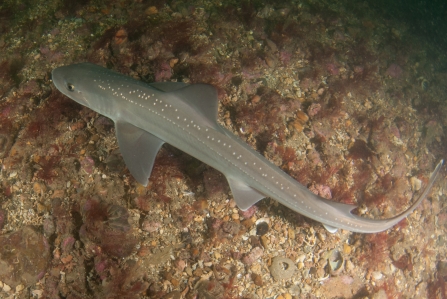
Starry smoothhound © Chris Roberts
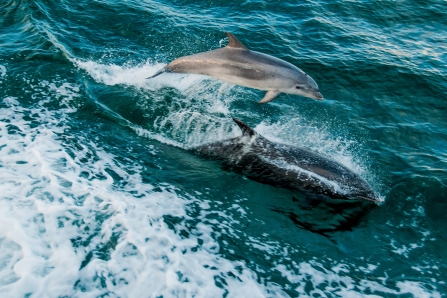
Bottlenose dolphins © Stewart Canham
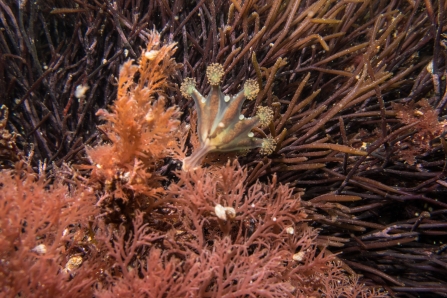
Kaleidoscope stalked jelly © JHatcher
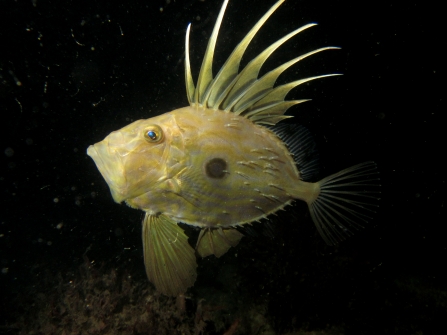
John Dory © JHatcher
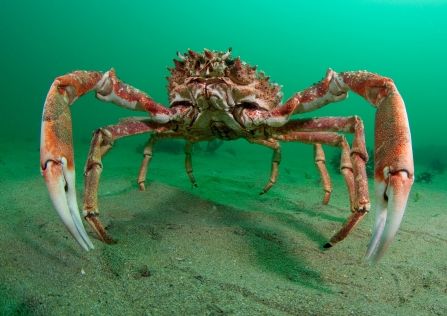
Spider crab © Trevor Rees