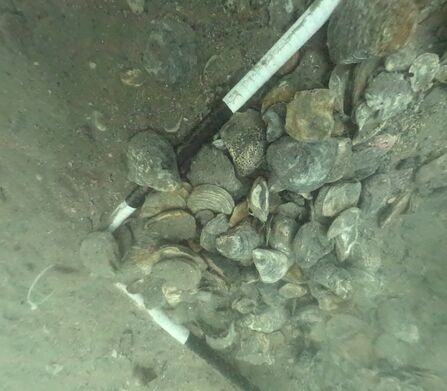
A collaborative project led by Dorset Wildlife Trust, and funded by Historic England, has taken an important step toward establishing the past presence of oyster reefs in Poole Bay. Oysters are thought to have once formed massive reefs on the seabed, built from generations of fused oyster shells and forming a unique habitat. This habitat is now extinct and there is little direct evidence that it existed.
The search began when Peter Tinsley, Dorset Wildlife Trust's Marine Policy and Evidence Manager picked up some old‑looking oyster shells on Studland Beach, including some with the classic reef oyster shape. One of these was dated to between 2,000 and 3,500 years old – twice the age of the Poole middens and possibly from before the Romans arrived with their taste for oysters. Reports of a dense layer of large oyster shells about half a metre below the sediment in Poole Bay suggested they might be reef oysters long since sedimented over.