

Lydia Gill
Species Survival Fund Project
The Species Survival Fund was a two-year programme to create and restore habitats and reverse the decline of species across England. Funded by Defra in partnership with the National Lottery Heritage Fund, the focus of the programme was to increase the abundance of wildlife populations in order to build resilience across landscapes. It is resilience that better enables species to withstand both anthropogenically-driven and random events that threaten them, such as severe weather, pollution, disease, and habitat loss. In Dorset, we set out to create and restore 517 hectares of habitat across 18 Dorset Wildlife nature reserves, selected for their strategic value and location within recognised nature recovery networks.
A variety of conservation and land management techniques were utilised to build resilience and make space for nature across the landscape.
Rewilding
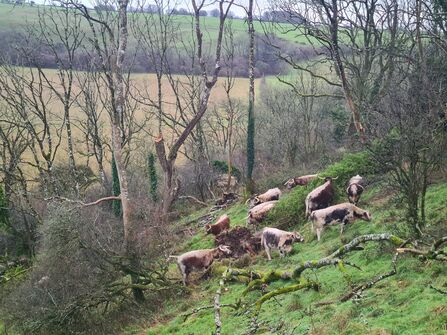
Through the restoration of natural processes and with a particular focus on the introduction of mixed extensive grazing, we have started to transform wildlife-poor agricultural grasslands and arable fields to wildlife rich-grassland, wood pasture, and scrub mosaics. At Lyscombe near Dorchester, we removed internal fences and installed a boundary fence to allow longhorn cattle and Konik ponies to graze across the site, working with a local farmer to deliver the grazing. We installed or replaced perimeter fencing on several other sites, including Kilwood and West Holme nature reserves near Wareham, and dug in five new water connections to allow new and existing sites to be grazed for more of the year.
Open habitat restoration
Using more traditional conservation methods we restored habitats sitting within nature recovery networks. Scrub removal at Lower Common near Verwood and Upton Heath near Poole has improved the quality of the heathland, benefitting species such as silver-studded blue butterflies, smooth snakes, and Dartford warbler. Similar work at Fontmell Down near Shaftesbury and Bracketts Coppice near Blandford has helped restore downland and wildflower meadows respectively, which many rare plants and invertebrates, including early gentian and marsh fritillary, depend on.
Creating and restoring wetlands and ponds
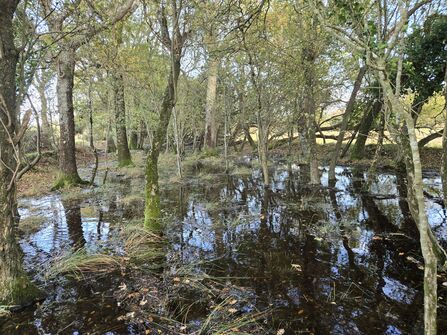
We identified project sites where we could restore water to natural, gravity-driven flow paths, to create more varied wetlands. At Tadnoll & Winfrith near Wareham, we infilled ditches at strategic locations and lowered embankments, allowing water to move through the natural low ground, creating widespread, multi-threaded channels across 17 hectares of land. Similar work at Lyscombe has helped restore the Little Piddle stream into its natural floodplain. In Brownsea Lagoon, we have created four new gravelled islands, totalling 175m2, increasing nesting habitat for common tern, sandwich tern and black-headed gull. We have also dug three new ponds and restored five ponds, across Kingcombe Meadows, Brooklands Meadow near Dorchester, Lower Common, and Peascombe near Bridport.
Woodland trees and hedgerows
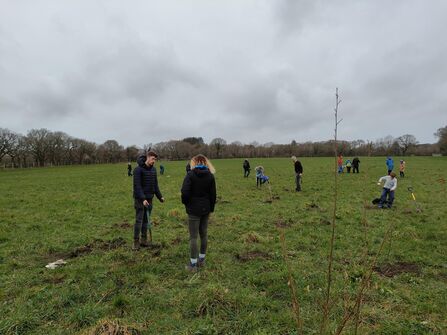
To create wood pasture, we have planted trees on ground with low biodiversity value, including species missing from the local landscapes. At West Holme, we have planted 2.4 hectares of mixed, broadleaved trees to connect two existing blocks of woodland, increasing connectivity and allowing species to move through the landscape more easily. We have continued coppicing and ride management at Ashley Wood near Blandford, Fontmell Down, and Kilwood to improve habitat for dormice and woodland flora, as well as undertaking hedge laying to improve the connectivity of boundary features at Kingcombe Meadows and Brookland Meadow.
Landowner and volunteer engagement
Over 100 volunteers have contributed more than 3,600 hours through weekly work parties and species surveys on Species Survival Fund sites. We have engaged over 1,000 people at events, both online and in person, and worked with neighbouring landowners, farmers, and communities to advise on actions across their land. This effort will catalyse future recovery, building resilience across shared landscapes and extending the reach of our reserves, giving species freedom to move and flourish. The initial signs from the work carried out are excellent, with several reserves already showing increases in biodiversity as habitat condition improves. As sites continue to develop and support greater species diversity and abundance, we will maintain extensive monitoring programmes to assess the project’s full impact.
Seb Elwood
Lydia Gill
Seb Elwood
