

Mitch Perkins / Pollinators in garden
Day 4: Garden Wildflowers
Welcome to day 4
Welcome to day 4 of your wildflower course. Today we are looking closer to home, and identifying common wildflowers that can be found in your very own garden.
Oxeye daisy
Leucanthemum vulgare
Statistics
When to see: June to September
Height: Up to 60cm
How to identify
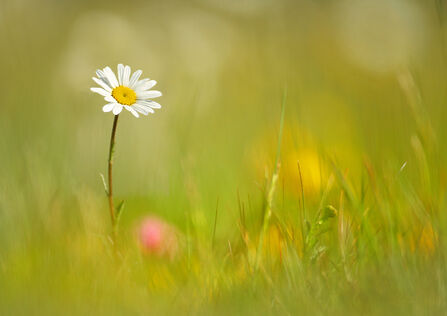
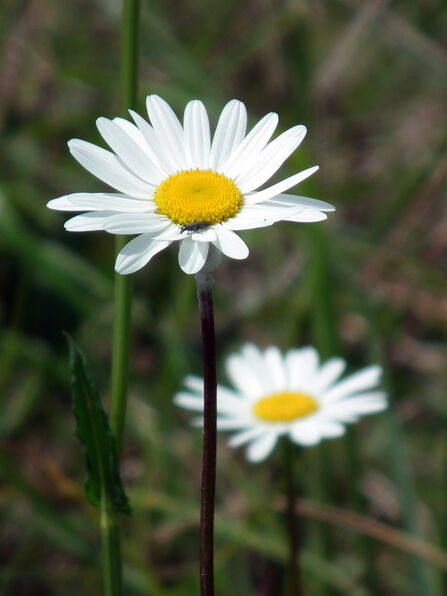
A commonly seen plant, the oxeye daisy thrives in grassland, roadside verges and waste ground, as well as in traditional hay meadows and along field margins. The oxeye daisy is easy to identify by its large, round flower heads that appear on single, tall stems. It has spoon-shaped leaves at its base and thin, jagged leaves along the stem.
Did you know?
The petal-plucking game, 'He loves me; he loves me not', is thought to have started with the oxeye daisy, and is now a common children's activity. While thinking of a suitor, each petal is plucked until the answer of whether love is possible becomes apparent. However, each 'petal' is actually an individual flower as oxeye daisies have composite flower heads consisting of yellow 'disc florets', surrounded by 'ray florets' (the 'petals').
©Jon Hawkins
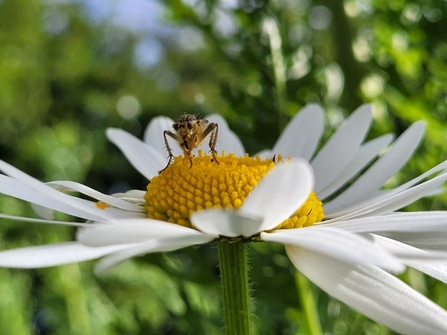
Daisy Pipe / Yellow dung fly on an oxeye daisy
Red campion
Silene dioica
Statistics
When to see: May to September
Height: Up to 1m
How to identify
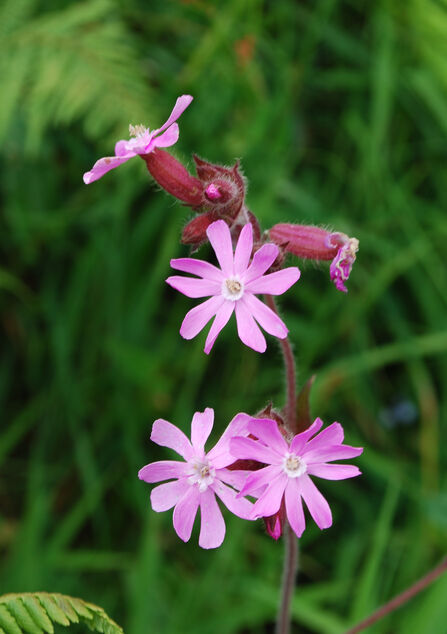
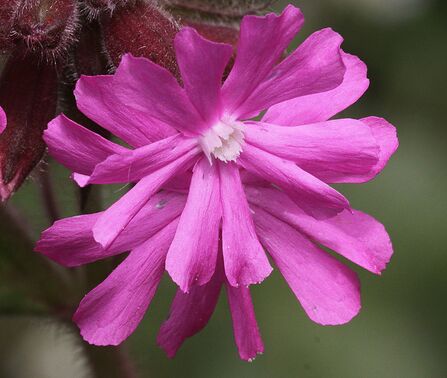
Red campion often brightens up roadsides, woodlands and hedges throughout the summer, appearing just after the bluebells finish flowering. It has pink-red flowers with five petals, each deeply notched and almost divided into two. Its leaves and stems are hairy. In places where it grows alongside white campion, the two may hybridise to produce pinky or white blooms
Did you know?
Also known as 'adder's flower', red campion is a good source of food for moths, bees and butterflies.
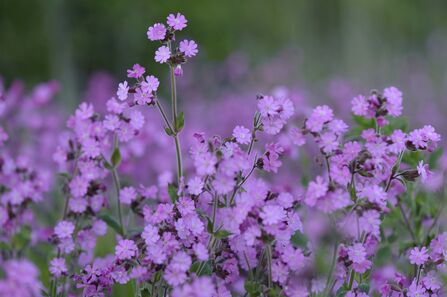
Red Campion ©Chris Gomersall/2020VISION
Foxglove
Digitalis purpurea
Statistics
When to see: June to September
Height: Up to 1.5m
How to identify
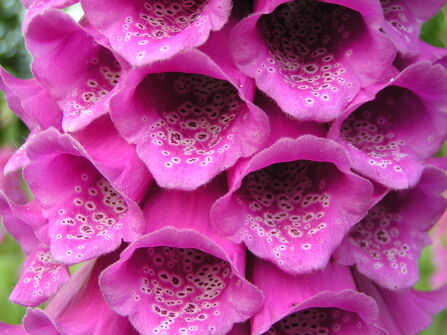
The striking bright flowers of the foxglove can be spotted in woodlands and gardens, and on moorlands, roadside verges and waste grounds. Foxgloves have large, flat leaves that form the base of the plant, and tall, upright flower spikes. Its distinctive, tube-shaped, magenta flowers are arranged around the stem and open in sequence from the bottom up. They are poisonous to ingest but they are an excellent source of nectar for bumblebees, moths and honeybees.
Did you know?
The Latin name, Digitalis, means 'finger-like' and refers to the tubular flowers of the foxglove. It is also the name of the drug that comes from the toxins of foxgloves and is prescribed for heart conditions.
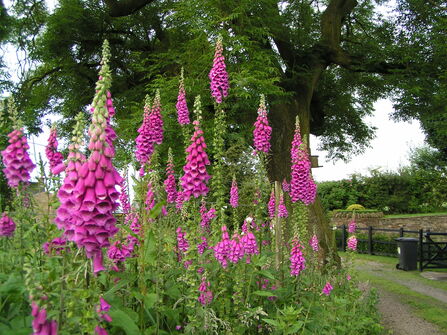
©Richard Burkmarr
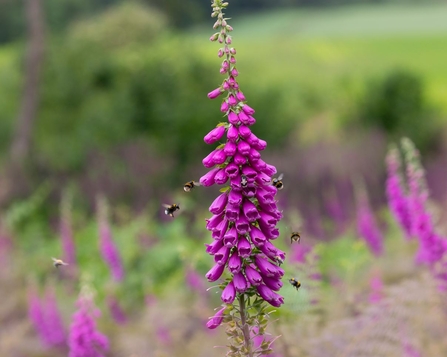
Jon Hawkins – Surrey Hills Photography / Foxglove with bees
©Richard Burkmarr