
Roy Burnham
Following a long career in the travel industry centred around London, a move to Dorset offered opportunities to get to know nature in more detail than I had before.
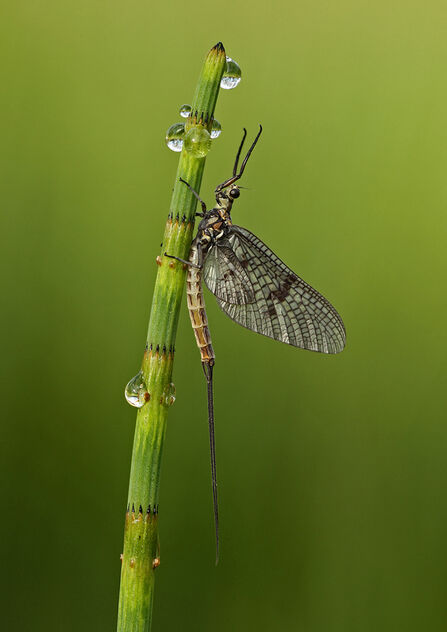
Birds, butterflies and moths had been my main areas of interest, but easy access to the River Cerne encouraged me to take a greater interest in river life. Dorset Wildlife Trust were offering one-day courses in riverfly monitoring, so I, along with a few local friends, signed up and enjoyed a day learning the differences between mayflies (Ephemeridae), stoneflies and olives.
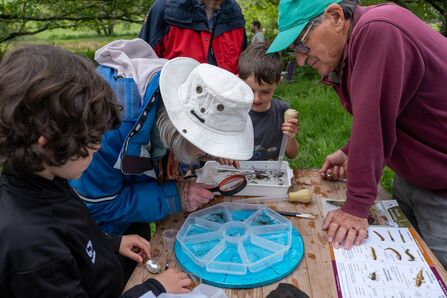
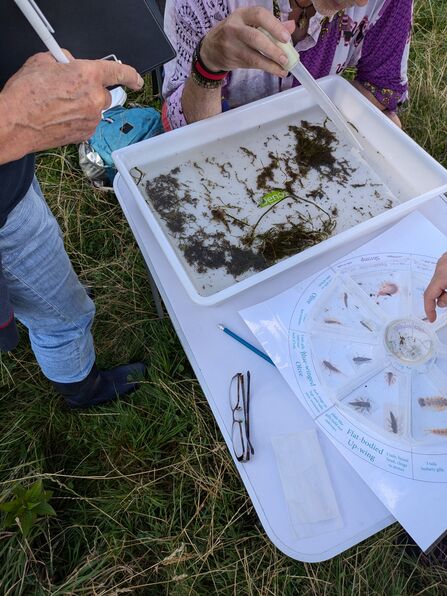
Finding a monitoring site on the river was easy and so our monthly recording sessions started. The Cerne is a clear chalk stream about two metres wide with depths of 30 to 50 cm. So, a very straightforward site to monitor invertebrates.
Dorset Wildlife Trust set the site trigger levels and on only one occasion in the five years since our start has the Angler’s Riverfly Monitoring Initiative (ARMI) count been below trigger level. This incident had no apparent cause and the Dorset Wildlife Trust riverfly expert was able to reassure us that there was enough life in the river to avoid reporting any problems to the Environment Agency - good news!
The introduction of the Cartographer recording website has improved the record keeping and analysis of the reported data. Since we started our recordings in 2020, two other groups are now operating at sites further downstream, so comparisons are now possible. Our monthly recording sessions provide a pleasant way to keep in touch with fellow researchers and to discuss the river life we find. Coffee provided by the landowner is an extra bonus!