

Jelly ear (also known as wood ear) fungus © Chris Lawrence
Day Five: Jelly and Ear Fungi
Welcome to day five
On day five of the course, we're looking at some strangely shaped and textured fungi, some of which have a striking and mystical resemblance to - you’ve guessed it - ears!
Jelly ear
Auricularia auricula-judae
Statistics
When to see: All year round
Cap width: 3-10cm
How to identify
You will find this strange shaped fungus growing on dead and dying branches - usually elder trees, ash, beech and sycamore. It favours damp and shady spots and you’ll usually find it growing in a cluster.
To identify - look for a gelatinous purple/brown fungus often growing in a cup shape with a smooth and shiny inner surface and velvety outside surface. As this fungus ages it develops lobes and becomes the uncannily familiar ear-like shape.
Did you know?
Jelly ear can survive freezing weather, thawing out afterwards and continuing to grow.
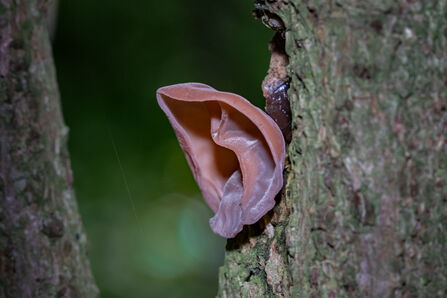
Jelly ear © Kieran Morgan
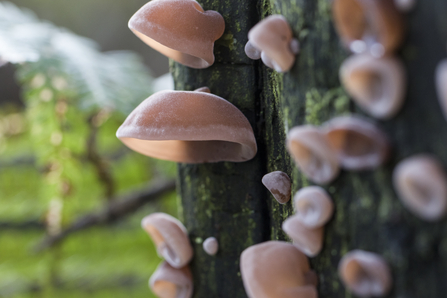
Jelly ear (also known as wood ear) fungus © Chris Lawrence
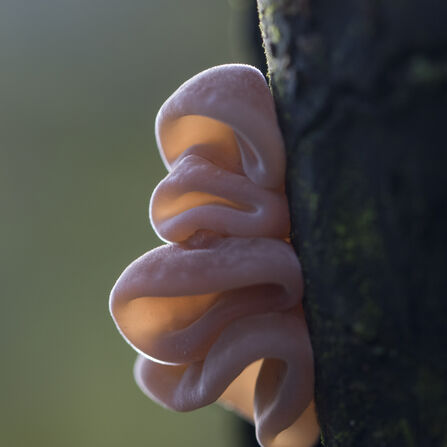
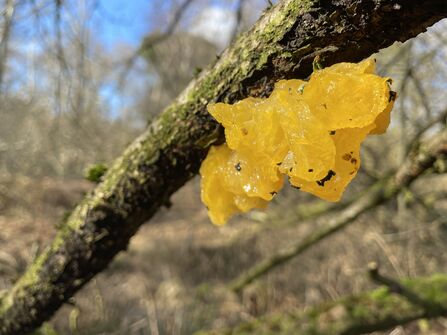
Yellow brain fungus
Tremella mesentrica
Statistics
When to see: All year round
Cap width: 2-7.5cm
How to identify
This type of jelly fungus is a parasite of fungi which feed on dead wood - such as the rosy crust fungus. It’s very common on gorse on heathlands - you may be able to spot it at sites such as Upton Heath.
It is a gelatinous mass in shape - less structured than other woodland fungi and can vary in colour from a pale yellow to rusty orange depending on wetness. It has a smooth surface.
Did you know?
Yellow brain fungus also goes by the name of 'witches butter' - it's original origin of this name is not confirmed but one tale tells that if it appeared on or around your house it meant a witch had cast a spell on the inhabitants.
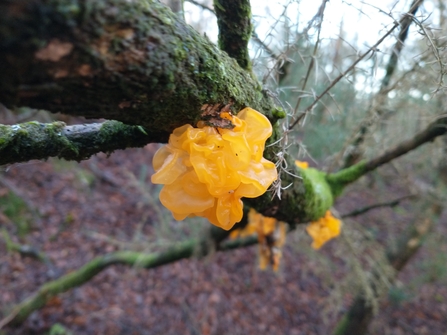
Mariko Whyte / Yellow brain
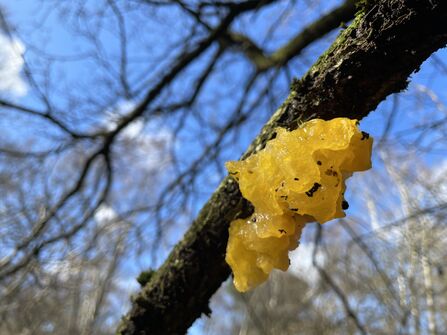
Yellow brain fungus © Tom Hibbert
Hare's ear
Otidea onotica
Statistics
When to see: June to November
Cap width: 1-5cm
How to identify
The hare’s ear fungus can be found in deciduous woodlands - appearing in groups on soil and leaf litter close to paths.
To identify, look for large lopsided ‘cups’ with margins that are slightly inrolled. The inner surface is smooth and a pink/orange colour whereas the outer surface is paler in comparison with a short hairy stem.
Did you know?
It's sometimes known as 'donkeys ear' and can be found growing across mainland Europe.
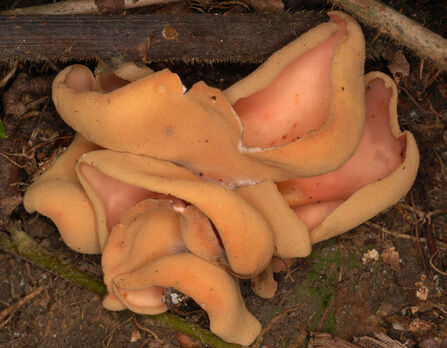
Hare's ear ©Dr Malcolm Storey