
Mariko Whyte / Waxcaps
Day Six: Waxcap Fungi
Welcome to day six
Welcome to day six of your fungi ID course. Today we are looking at waxcaps - a selection of fungi which take the name from their waxy texture.
Due to the decline in the UK’s suitable natural grasslands, these fungi may be a challenge to spot - but they can be easily defined if seen by their bright colours and distinctive ‘mushroom’ shape.
Pink waxcap
Porpolomopsis calyptriformis
Statistics
When to see: September to November
Cap width: 2-7cm
How to identify
You can find pink waxcaps in nutrient-poor unimproved grasslands - including areas such as churchyards or sheep-grazed pastures. They sometimes appear in small clusters, but are more often seen alone.
To identify, look for a fungus with a domed pale pink cap and a white stalk. As this waxcap ages, the cap will often split and then turn upwards.
Did you know?
The pink waxcap is also known as the ballerina waxcap or the pink ballerina, as the soft pink cap looks like a frilly tutu as it opens out.
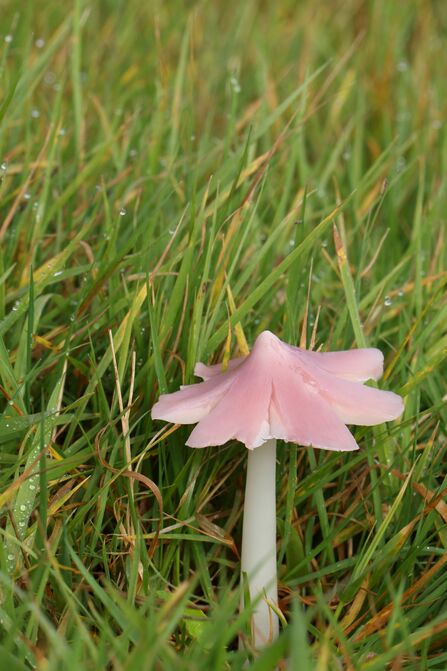
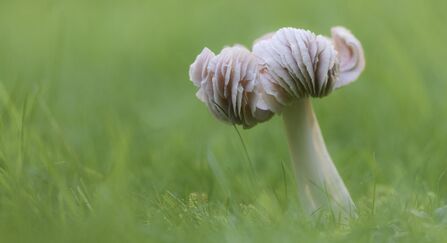
Pink waxcap © Guy Edwardes/2020VISION
Scarlet waxcap
Hygrocybe coccinea
Statistics
When to see: September to November
Cap width: up to 6cm
How to identify
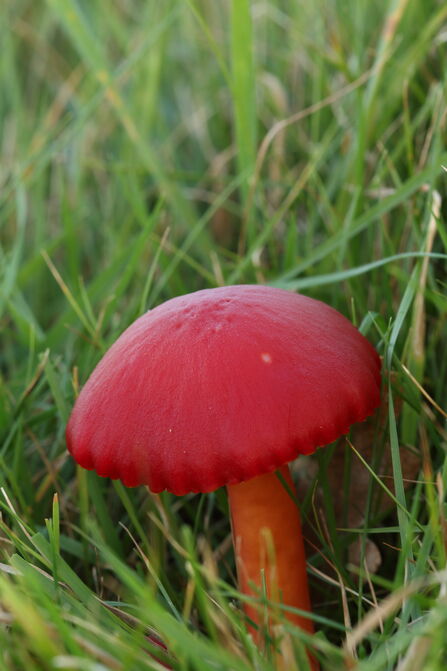
This fungus is one of the more common waxcaps to find. You may be able to find it in large groups on cropped grassland, lawns, parks and some churchyards.
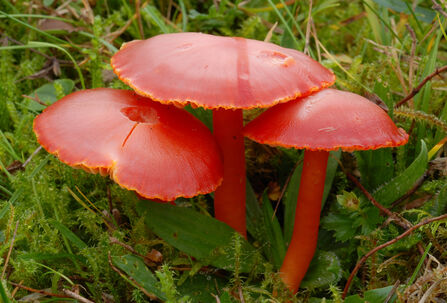
To identify - look for a red, moist cap with red or yellow gills underneath with a yellow edge. The stem is dry and smooth, in a paler tone than the cap, becoming more yellow towards the base.
Did you know?
This waxcap likes to grow in untreated and nutrient poor grasslands - and as a consequence is now scarce.
Snowy waxcap
Cuphophyllus virgineus
Statistics
When to see: September to December
Cap width: 5-7cm
How to identify
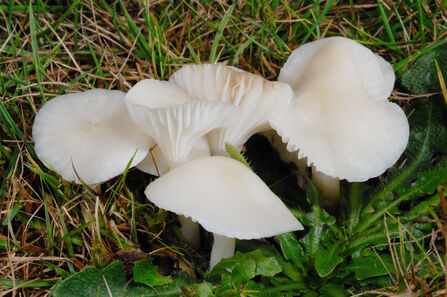
These striking waxcaps can be found in unimproved, nutrient-poor grasslands in clusters, such as in parkland, garden lawns and churchyards and are one of the most widely recorded waxcaps.
You can identify this fungus by its smooth, pure white cap with waxy gills and an obvious but slender stem. Their caps flatten over time and the gills become more ivory as they age.
Did you know?
The snowy waxcap is one of the most commonly recorded waxcaps, as it is the hardiest of the species and therefore can survive in more habitats.