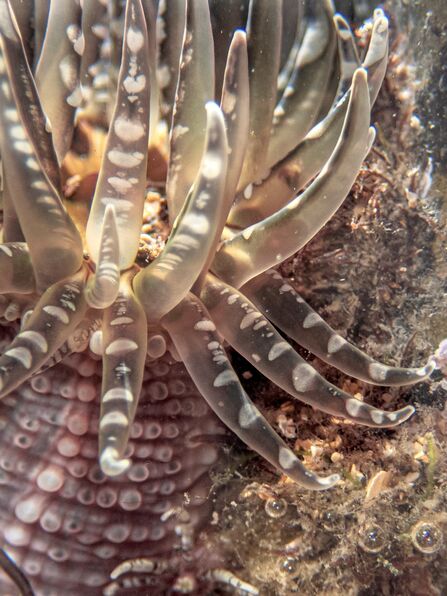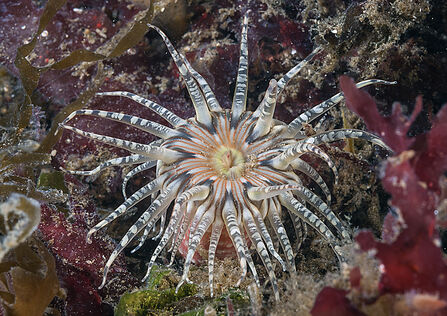

Day Two: Anemones
Beadlet anemone
Actinia equina
Statistics
When to see: All year round
Size: Usually 5cm in diameter
How to identify
You can spot this anemone in rockpools - it is usually dark red in colour (occasionally has orange or green) with short thick tentacles. It retracts its tentacles when disturbed or when the tide goes out - leaving what resembles a blob of jelly!
Did you know?
Beadlet anemones are highly territorial. They have a ring of beautiful bright blue beads beneath their tentacles called acrorhagi that are packed full of stinging cells. They use these beads to fight off other anemones and defend their preferred patch.
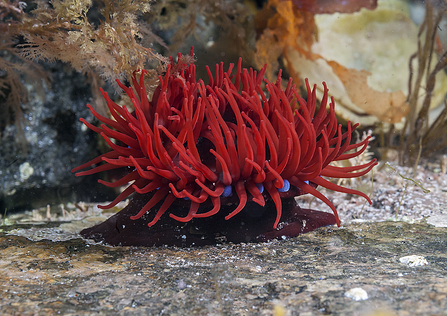
Mark Thomas / Beadlet anemone
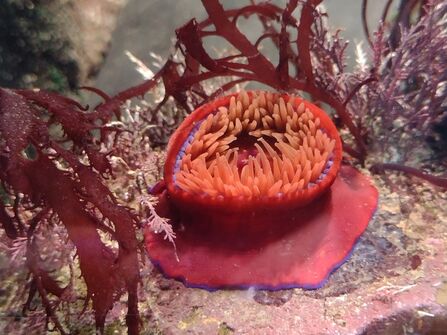
Snakelocks anemone
Anemonia viridis
Statistics
When to see: All year round
Size: Usually 8cm in diameter with tentacles up to 15cm in length
How to identify
Snakelocks anemones live attached to rocks on the low shore and in shallow seas down to about 12m. They have a squat brownish body and long, wavy, snake-like tentacles that give them their name. These tentacles are normally bright green with purple tips and are home to a kind of algae which produces energy from sunlight, meaning they are not often retracted.
Did you know?
Snakelocks anemone cells contain a special protein that makes them glow fluorescent green under ultraviolet light!

Snakelocks anemone by Dan Bolt
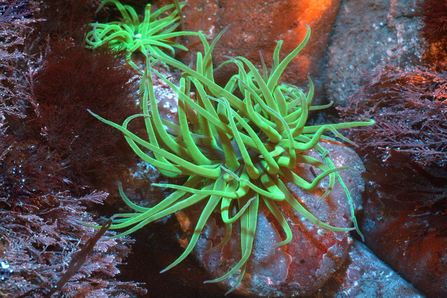
Julie Hatcher / Fluorescent snakelocks anemone
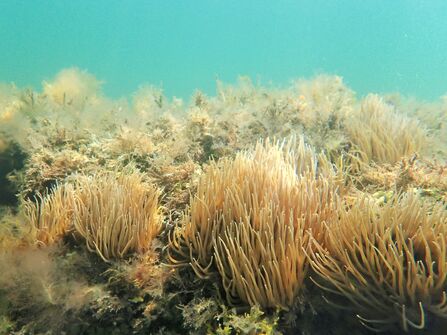
Sarah Hodgson / Snakelocks anemones
Gem anemone
Aulactinia verrucosa
Statistics
When to see: April to October
Size: Usually 5cm in diameter
How to identify
One of the smaller and less common anemones to find if you are rockpooling. The gem anemone can appear as two different species when the tentacles are exposed or retracted. They have around 48 tentacles, deep blue with white blotches, with green around the mouth. When tentacles are retracted, the column is usually an off white/pink, covered in tiny warts.
Did you know?
Young gem anemones are brooded within the parent and then ‘spat out’ when ready to grow on their own!