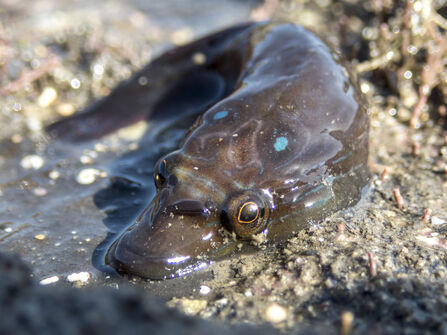

Sandra Stalker, 2025 photography competition / Diver with a tompot blenny
Day Seven: Fish
Welcome to day seven
Today is the last day of your course, and we are going to learn about three fish you can find when rockpooling on the Dorset coast!
Shanny
Lipophrys pholis
Statistics
When to see: All year round
Size: Up to 17cm in length
How to identify
The shanny is known also by the name ‘common blenny’ and can be found in rockpools and shallow water. They are shy, so will often be hidden under stones or seaweed, and are very well camouflaged
These fish are normally brown or beige with darker blotches. Males are almost black during the breeding season from April-August. They can be distinguished from the larger tompot blenny as they have no tentacles on their heads.
Did you know?
It is the male shanny that guards the eggs! Once the female has laid the precious eggs, the father will guard them for over a month against hungry predators. During breeding and nesting, the male shanny's colouration darkens to almost black except for his lips which change to bright white.
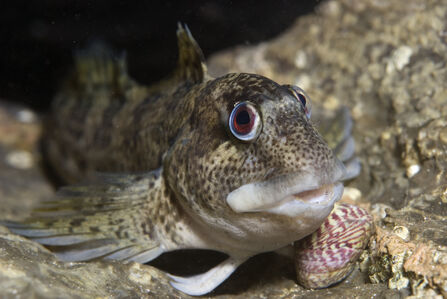
Shanny ©Linda Pitkin/2020VISION
Rock goby
Gobius paganellus
Statistics
When to see: All year round
Size: Up to 35cm in length
How to identify
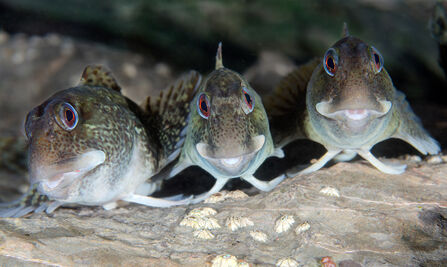
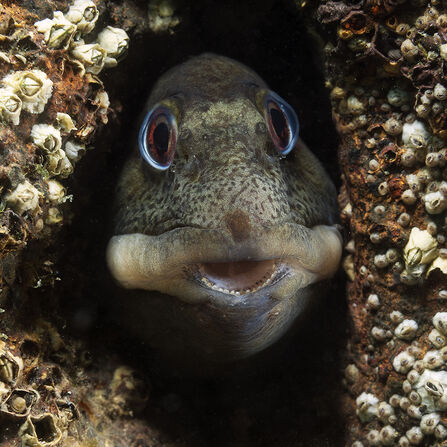
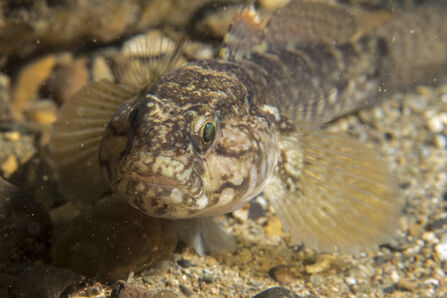
The rock goby is found on rocky seabeds in shallow seas and is also commonly spotted in rockpools during the summer months, where they feed on small prawns, crabs and worms.
There are several types of goby found in the UK, so accurate idenfitication can be difficult. The rock goby is usually pale to dark brown with mottled markings and dark bands along its body. In breeding season, the male becomes very dark, almost black. You can tell gobies from blennies by the number of dorsal fins - gobies have two and blennies have one.
Did you know?
The female rock goby lays up to 7,000 eggs in a single layer in a rocky crevice. These eggs are then defended by the male until they hatch.
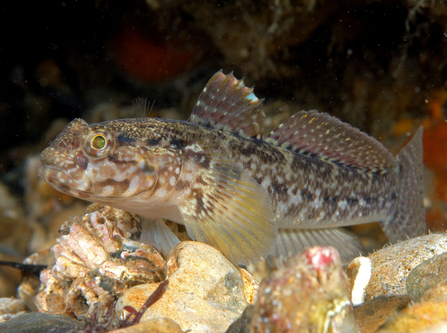
Rock goby ©Paul Naylor www.marinephoto.co.uk
Shore clingfish / Cornish sucker
Lepadogaster purpurea
Statistics
When to see: April to October
Size: Up to 7cm in length
How to identify
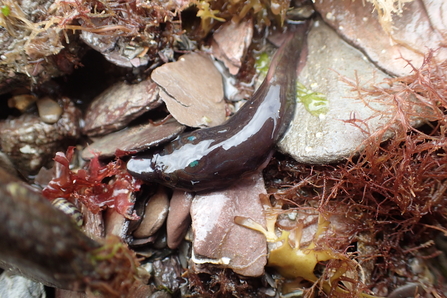
This fascinating fish has a pelvic fin which is modified into a sucker, allowing it to stick upside down on the underside of rocks.
To identify look out for a small, distinctive reddish/brown fish, with a flattened head and duck-bill snout. They have two turquoise eye spots on the top of the head, behind the eyes and large tentacles in front of each nostril.
Did you know?
Male clingfish will guard their eggs by attaching themselves to the underside of rocks and sticking there, so it is especially important not to disturb them if you turn a rock over and find one!
Wembury Marine Centre