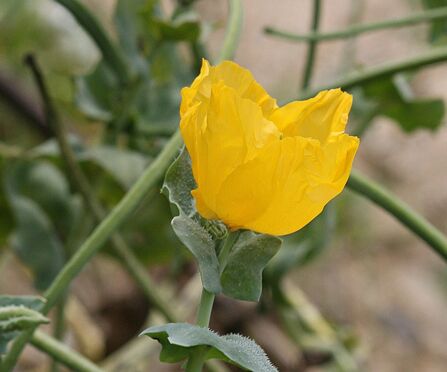

©Lara Howe
Day 3: Coastal Wildflowers
Welcome to day 3
Today, we are encouraging you to look out for these coastal species. Explore Dorset’s stunning and wild coastline, such as at Kimmeridge Bay or Chesil Beach - and keep your eyes peeled!
Thrift
Armeria maritima
Statistics
When to see: April to October
Height: Up to 20cm
How to identify
Bright bunches of the rounded, pink flowers of thrift are a common sight on coastal cliffs and shingle beaches, commonly seen here in Dorset at our wildlife centre and reserve at Chesil beach. They feature rounded, pink, clover-like flowers which appear on long stems above springy cushions of foliage.
Did you know?
The flowers of thrift were featured on one side of the old 'thrupenny bit' - the three pence coin used until the decimal system took over in the 1970s.
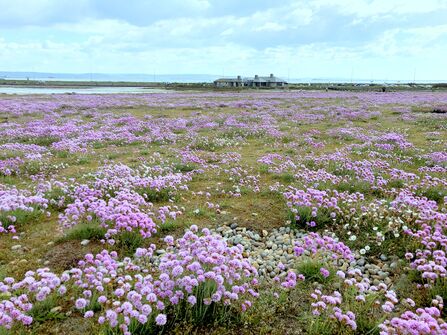
© Marc Kativu-Smith
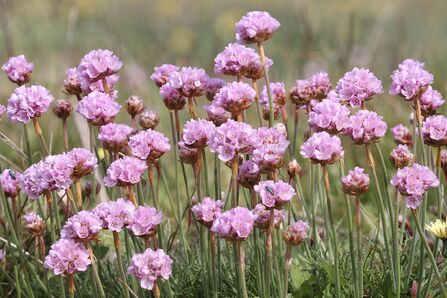
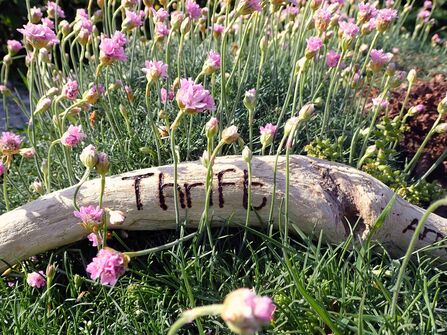
Thrift wildflowers © Julie Hatcher
Sea campion
Silene uniflora
Statistics
When to see: May to September
Height: Up to 30cm
How to identify
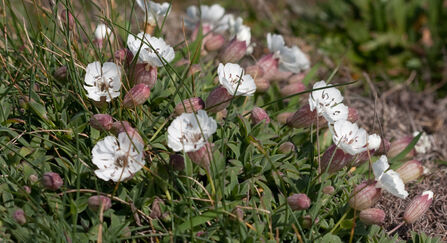
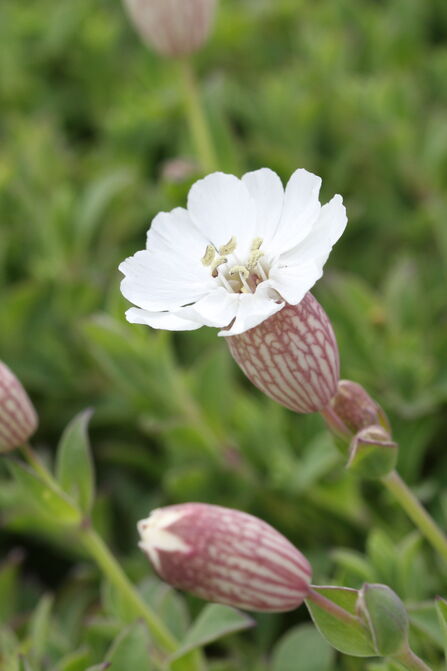
You’ll commonly find this flower near rocky places such as sea cliffs, shingle coastlines or even gravel paths. Each sea campion flower usually grows along and has a pink- and purple-veined calyx flowerhead with five white, bi-lobed petals. This means that each individual petal is split down the middle, giving the illusion of ten petals instead of five. The sea campion’s upright grey-green stems are covered in small, waxy, lance-shaped leaves.
Did you know?
Sea campion has also been referred to as ‘dead man’s bells’, ‘witches thimbles’ and ‘Devil’s hatties’! According to folklore, this plant should not be picked as it is said to bring death.
Vaughn Matthews (
Yellow horned-poppy
Glaucium flavum
Statistics
When to see: June to September
Height: Up to 50cm
How to identify
The yellow horned-poppy is a coastal plant that grows on shingle beaches, cliffs and sand dunes. You can identify it by the golden-yellow flowers which appear in June and are followed by the 'horns' - curling seedpods that can be up to 30cm long. When it is broken, the plant exudes a yellow sap which is poisonous.
Did you know?
The seeds of the yellow horned-poppy are often eaten by small birds, such as twite and snow bunting.