

Day 5: Heathland Wildflowers
Welcome to day 5
Welcome to day 5 of your wildflower course. Today, you're going to learn how to identify wildflowers commonly found in heathland habitats across Dorset and beyond. Why not visit Upton Heath or Tadnoll and Winfrith Heath and try out your new knowledge?
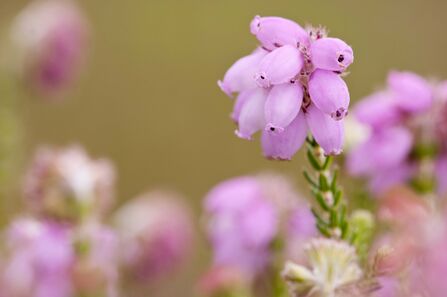
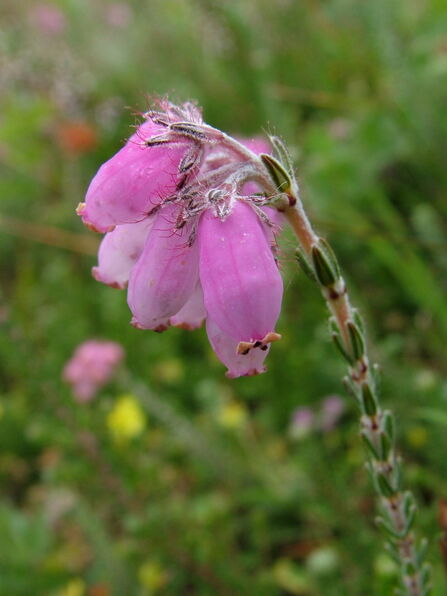
Cross-leaved heath
Erica tetralix
Statistics
When to see: All year round - flowers from June to September
Height: Up to 30cm
How to identify
Cross-leaved heath can be found in damp heathland areas and it attracts many nectar-loving insects, including bees and moths. It has pink, bell-shaped flowers clustered at the end of long, branched stems, whilst it’s grey-green leaves are narrow and sit in whorls of four. It is similar to bell heather, but its flowers are larger and sit in a small cluster on one side of the stem.
Did you know?
Cross-leaved heath, along with other heathers like ling and bell heather, are ideal for wildlife gardens. Plant an ericaceous border (for acid-loving plants) and enjoy watching the bees buzz from flower to flower on a lazy sunny afternoon.
©Ross Hoddinott/2020VISION

©Guy Edwardes/2020VISION
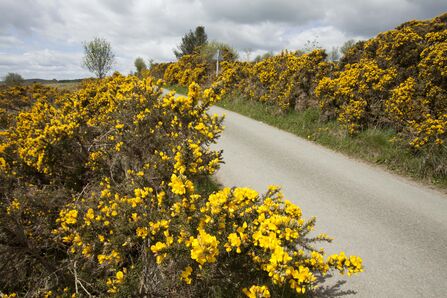
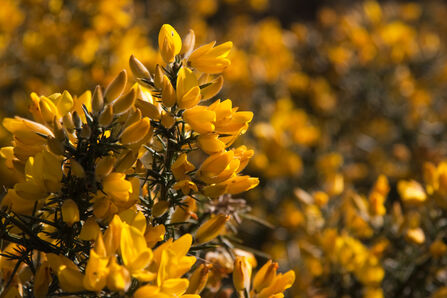
Common gorse
Ulex europaeus
Statistics
When to see: All year round - flowers from January to June
Height: Up to 2m
How to identify
Also known as yellow gorse, this plant is a large shrub and a member of the pea family, commonly seen in heathland areas, providing shelter to many species such as Dartford warblers, stonechats and yellowhammers. Common gorse is covered in needle-like leaves and distinctive, coconut-perfumed, bright yellow flowers during the early spring and summer.
Did you know?
Traditionally, common gorse was regularly collected from commonland for a number of purposes: it provided fuel for firing bread ovens; was used as fodder for livestock; was bound to make floor and chimney brushes; and was used as a colourant for painting Easter eggs. However, there were a number of restrictions on its collection; for example, in Oxfordshire, only the amount that could be carried on the back could be cut for fuel.
©Mark Hamblin/2020VISION

Heather
Calluna vulgaris
Statistics
When to see: all year round - flowers from August to October
Height: Up to 90cm
How to identify
Heather is also known as 'ling' and is an abundant plant on heathland, moorland, bogs and even in woodland with acidic or peat soils. The stems of heather are woody and coarse, sometimes clumped together and close to the ground in exposed areas. The delicate pink flowers grow loosely up the stem and the short, narrow leaves are borne in rows.
Did you know?
Historically, heather has been used for many purposes, such as fuel, fodder, building materials, thatch, packing and ropes. It was also used to make brooms, which is how it got its Latin name - Callunais derived from the Greek word meaning 'to brush'.
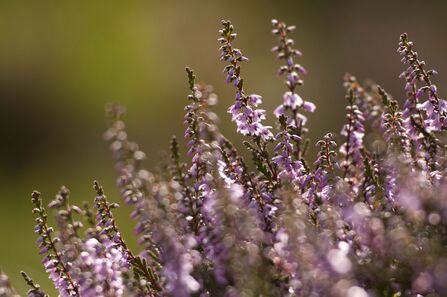
©Ross Hoddinott/2020VISION
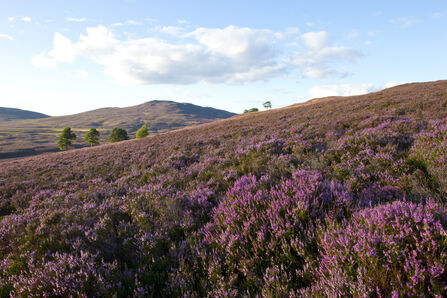
©Mark Hamblin/2020VISION
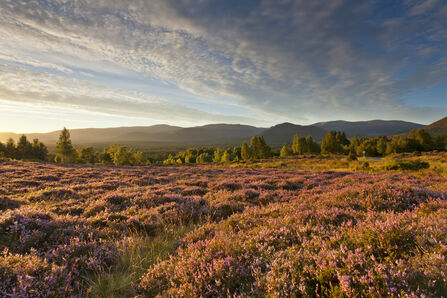
Heather © Mark Hamblin 2020Vision