
Day 1: Urban Wildflowers
Welcome to day 1
Welcome to the first day of your wildflower identification course. Today, you're going to learn how to identify 3 wildflowers commonly found in urban environments across Dorset and beyond. Often referred to as ‘weeds’, many of these pretty flowers can be found growing from cracks in walls, pavements and at the sides of roads, brightening our towns and villages.
Herb-robert
Geranium robertianum
Statistics
When to see: May to September
Height: Up to 30cm
How to identify
Herb-Robert is a low growing plant commonly found in more shaded areas, away from acidic soils. It has five-petalled, pink flowers, and reddish stems. The deeply divided, lobed leaves are also tinged with red.
Did you know?
Traditionally, herb-Robert was used to treat nosebleeds and headaches, as a tonic for tummy upsets, as an antiseptic to help heal wounds, and even as a mosquito repellent.
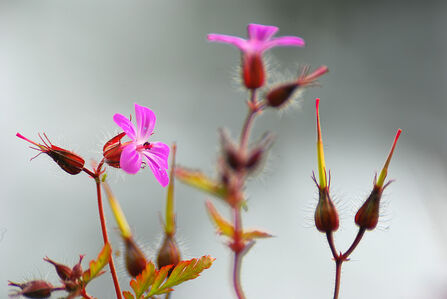
©Zsuzsanna Bird

©Philip Precey
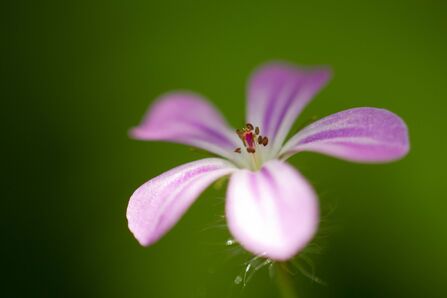
©Ben Hall/2020VISION
Hairy bitter-cress
Cardamine hirsuta
Statistics
When to see: All year
Height: Up to 30cm
How to identify
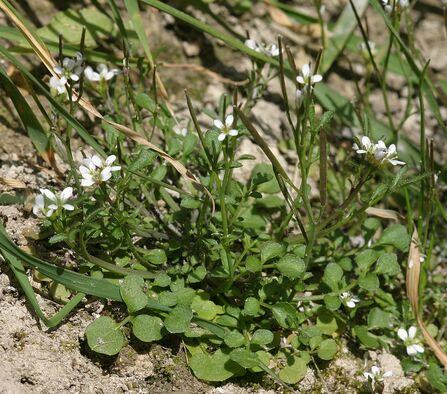
You’ll commonly find this plant living in rocky areas, walls, gardens and cultivated ground. Hairy bitter-cress is small and hairy, with a rosette of leaves at its base and small white flowers present for most of the year.
Did you know?
Looking like a miniature water-cress, hairy bitter-cress can also be added to salads. Another similar species, wavy bitter-cress, is taller and often found on riverbanks, and in ditches and marshes.
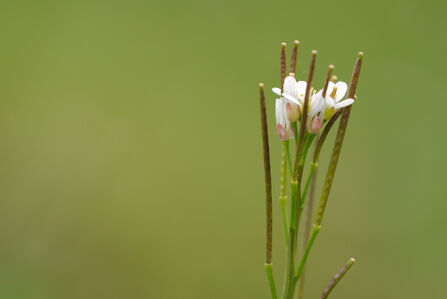
©Amy Lewis
Groundsel
Senecio vulgaris
Statistics
When to see: All year
Height: Up to 40cm
How to identify
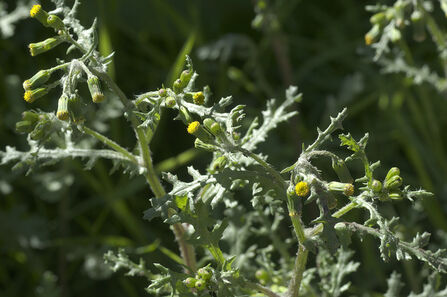
Groundsel is an annual weed of cultivated or disturbed ground, popping up along field edges, roadside verges and on waste ground.
It has long, lobed and ragged leaves that are stalked low down the stem, but unstalked further up the stem. The stems branch to clusters of small, yellow flower heads that look like green and yellow tubes; as the plant seeds, these turn fluffy and white.
Did you know?
Like other members of the daisy family, groundsel has 'composite' flower heads, which are made up of lots of tiny flowers grouped together.
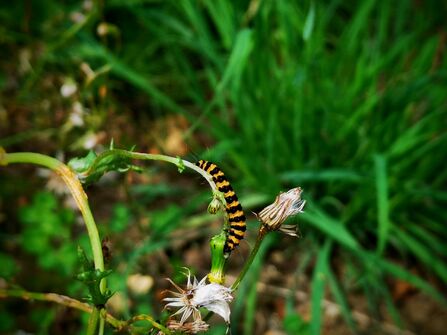
In the image below, you can see the distinctive black and yellow cinnabar caterpillar on a groundsel. These caterpillars tend to eat ragwort but you can sometimes see them munching on groundsel!
©northeastwildlife.co.uk