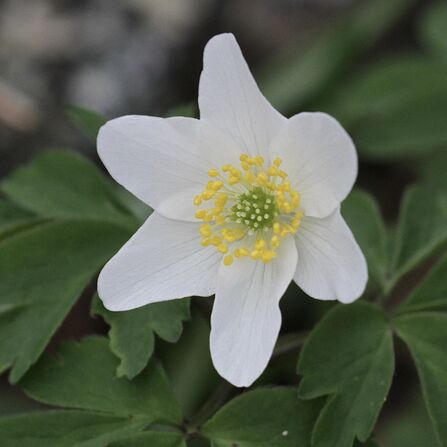

© Jon Hawkins Surrey Hills Photography
Day 7: Woodland Wildflowers
Welcome to day 7
Today is the last day of your course, and we are going to learn about three flowers you may find on a woodland walk. Dorset has a large number of ancient woodlands, from Powerstock Common to Bracketts Coppice. Woodland flowers are usually in bloom from early spring to summer, so you may want to save this factfile for next spring!
Wood avens
Geum urbanum
Statistics
When to see: May to August
Height: Up to 50cm
How to identify
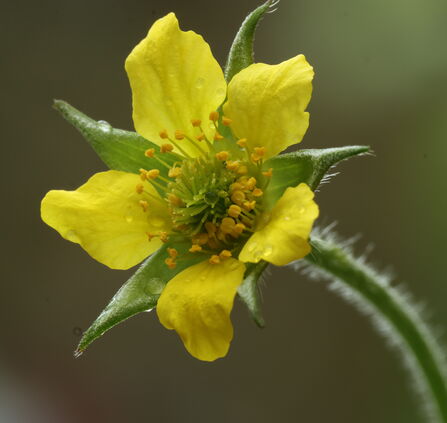
A common plant of hedgerows and woodlands, wood avens is also known as 'herb bennet'. It’s a straggly, hairy plant that has downy, three-lobed leaves with toothed edge, and yellow flowers with five petals. The flowers appear in loose clusters and are replaced by spiky seed heads with red hooks that can easily get picked up by passing animals
Did you know?
It's thought that the common name 'herb bennet' arose from the medieval Latin 'herba benedicta' meaning 'the blessed herb' because the plant was widely used in herbal medicine at this time.
Wild garlic
Allium ursinum
Statistics
When to see: April to May
Height: Up to 35cm
How to identify
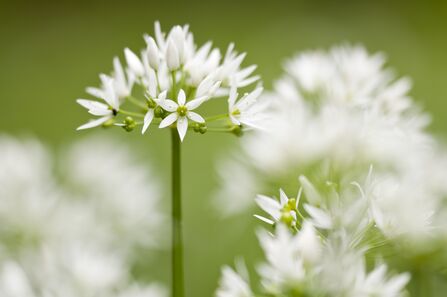
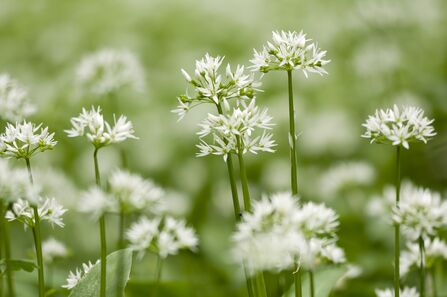
Wild garlic spends most of the year as a bulb underground in ancient woodland, only emerging to flower and leaf from April onwards, when you can smell its distinctive scent in many woodlands across the UK. Look for rounded clusters of star-like, white flowers borne on straight green stems. Its leaves are grey-green, oval and narrow, and grow around the base of the stem.
Did you know?
Also known as ramsons, the leaves and roots of wild garlic can be eaten and do smell and taste of garlic.

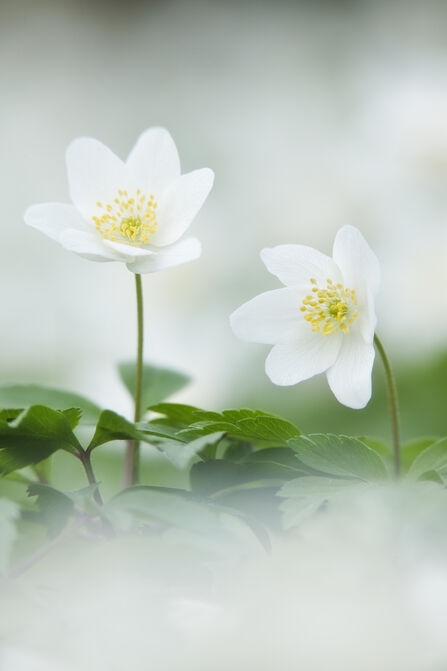
Wood anenome
Anemone nemorosa
Statistics
When to see: March to May
Height: Up to 25cm
How to identify
This flower blooms between March and May, before the canopy becomes too dense, but its seeds are mostly infertile and it spreads slowly through the growth of its roots. An easily recognisable flower, the wood anemone is a low-growing plant, with six to seven large, white or purple-streaked 'petals' (which are actually its sepals), surrounding a cluster of distinctive yellow anthers. Its leaves are deeply lobed and it has a thin, red stem.
Did you know?
The wood anemone is named after the Greek wind god, Anemos, who sent his namesakes, the anemones, in early spring to herald his coming. This legend gives the flower its other common name of 'windflower'.
Dorset Wildlife Trust manages many woodland nature reserves sympathetically for the benefit of all kinds of wildlife. A mix of coppicing, scrub-cutting, ride maintenance and non-intervention all help woodland wildlife to thrive.