
Help nature take the lead

£50
could help provide two protective guards for young black poplar or disease-resistant elm trees at Lyscombe.
£100
could help install and maintain nearly 10 metres of fencing, supporting natural grazing and habitat recovery.
£250
could help fund specialist monitoring to restore natural watercourses and create new wetland habitat for wildlife.How will your support help nature take the lead?
By donating today, you can help us apply what we've learned at Wild Woodbury and Lyscombe across the county at a landscape-scale – restoring habitats, supporting wildlife and creating a healthier future for nature in Dorset.
What will you be funding?
Grazing for nature
Carefully managed, low-intensity grazing is an important tool for nature recovery, helping to create a varied mosaic of habitats. Grazing, trampling and rootling by large herbivores reduces dominant grasses and creates bare ground, supporting wildflowers, pollinators, dung beetles, birds and other wildlife by providing food, shelter and breeding opportunities.
Your donation could help us introduce traditional and rare-breed cattle, ponies and pigs to nature reserves such as West Holme, Sopley Common and the recently acquired land at Kingcombe Meadows, helping to create the conditions for wildlife to thrive.
What do we need to do?
- Plan and install water points and livestock infrastructure
- Develop appropriate grazing regimes
- Create safe access routes for visitors
- Install wildlife-friendly fencing
-
Monitor how animals interact with the land

Rob Farrington / One of the Hereford cows at Wild Woodbury
Bringing water back
By allowing water to move naturally across the land, vital wetland habitats are formed, supporting wildlife, improving water quality and building resilience to drought. Thanks to you, we are already bringing water back to the sites at newly acquired land at Tadnoll & Winfrith, and at Lyscombe. With additional funding, we can extend this work to other sites across the county, building a network of new ponds and wetlands, benefitting more species and communities in Dorset.
What do we need to do?
- Commission hydrological surveys
- Create scrapes and ponds
- Install leaky dams
- Block historic drainage systems
-
Identify areas where water can safely spread across the land

Steve Davis / Frog's head poking out of a pond
Natural regeneration
By allowing trees, scrub and wildflowers to establish naturally across a landscape, a rich tapestry of habitats is created, shaped by local conditions. Your donation will allow us to nurture this process at Happy Bottom, Ashington Meadow, Peascombe and new land we have recently acquired at Bracketts Coppice and Kingcombe, helping wildlife to return, reconnecting habitats and making our nature reserves more resilient for the future.
What do we need to do?
- Encourage diverse habitats with long grass and scrub
- Create open patches of ground for wildflowers
- Remove invasive species and redundant infrastructure
- Enable native tree and shrub species to establish
-
Leave deadwood in place

Steve Davis
Spreading the message
A key element of nature recovery is people. To give nature the space and opportunity to take the lead, we need to engage with local communities, share what we are learning and build a network of people working together for nature.
Our Wilder Dorset team works with landowners across the county, bringing together farm clusters, individual landowners and large-scale landscape partnerships to support nature recovery. Inspired by what we have achieved at Wild Woodbury, they are working to rewild an area of land beyond Wild Woodbury itself.
But there is still much more to achieve. And we can, with your help.
What do we need to do?
- Support farmers through cluster groups and site visits
- Expand capacity for ecological surveys and monitoring
- Monitor and advise on SNCI management
- Help landowners access the Landscape Recovery scheme

James Burland / Guided walk at Wild Woodbury
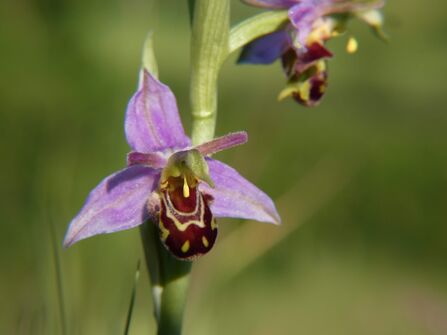
Daisy Meadowcroft
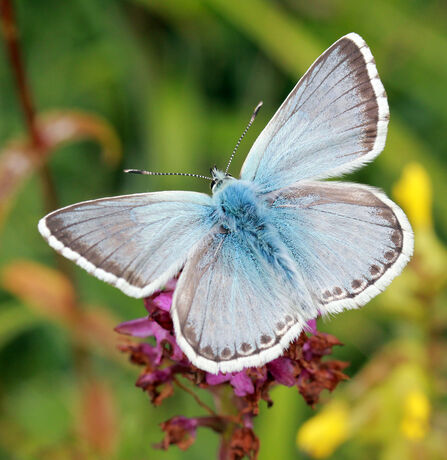
©Jim Higham
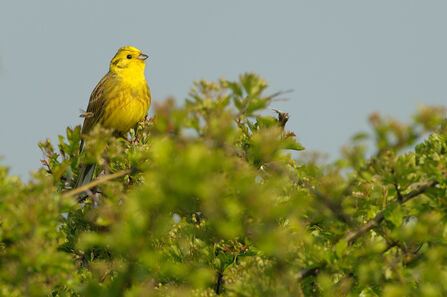
Yellowhammer © Chris Gomersall / 2020VISION
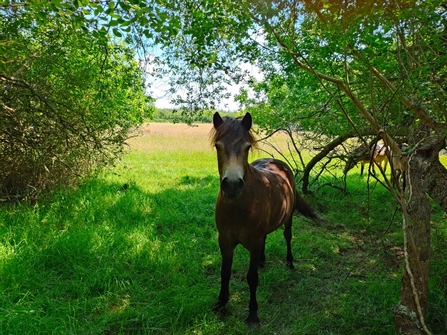
Rob Farrington / Exmoor pony at Wild Woodbury

Mangalitsa/Berkshire cross pigs at Wild Woodbury. Hardy animals with a proven track record in helping habitat restoration. Rob Farrington

Peter Stone / Wild Woodbury wetland

Daisy Meadowcroft
David Longshaw
How nature has already taken the lead on our nature reserves
Wild Woodbury Five Years On
When we acquired Wild Woodbury in 2021, the land was heavily drained and intensively farmed. Five years later, it has been transformed into a thriving landscape for wildlife.
We've created around 40 hectares of new wetland, restoring natural processes and creating a mosaic of habitats where wildlife can thrive. We've recorded 125 bird species, including 28 on the UK Red List, and identified more than 600 species of invertebrate. Skylarks have increased from just two territories in 2021 to more than 55 within 18 months. Wetland birds are returning, wildflowers are flourishing and rare species are finding new habitat.
This is what nature recovery looks like. And now, we want to take what we've learned at Wild Woodbury and apply it elsewhere across Dorset.

Vaughn Matthews
Lyscombe National Nature Reserve
In 2024, we acquired 334 hectares of land at Lyscombe, creating one of Dorset's newest nature reserves.
With its chalk downland, ancient woodland and farmland, Lyscombe is already a special place for wildlife. Around 50 hectares are designated as a Site of Special Scientific Interest, and the reserve is home to a rich variety of plants and wildlife, including bee and pyramidal orchids.
Now, we're working to restore and enhance the habitats across the recently designated King's Series National Nature Reserve, creating even more space for nature to recover.
Lyscombe is one of the places where we're putting our experience of nature recovery into practice – using what we've learned to restore habitats, support wildlife and create a healthier landscape for the future.

Ben Atkinson / Pyramidal orchids at Lyscombe