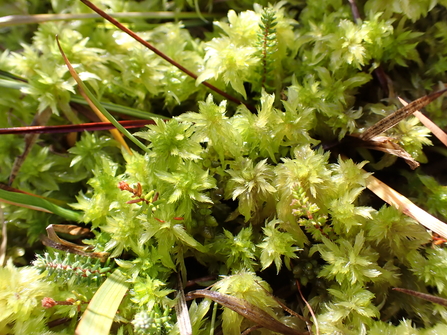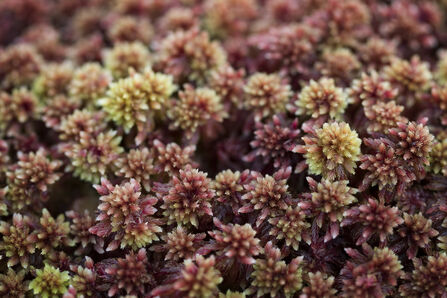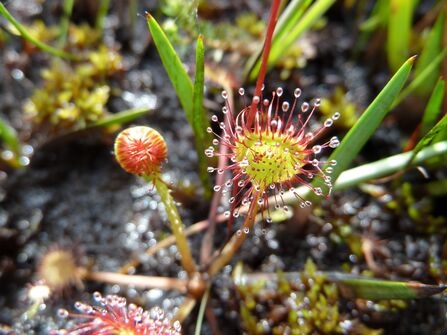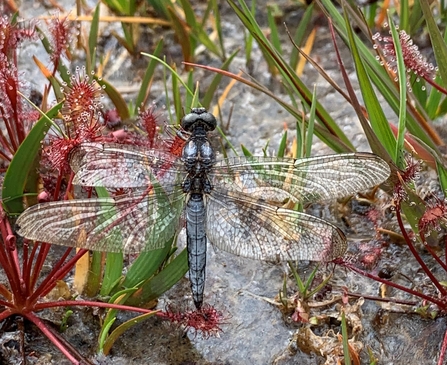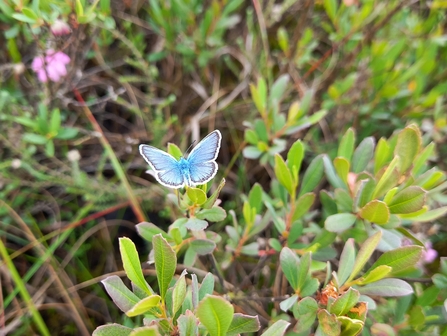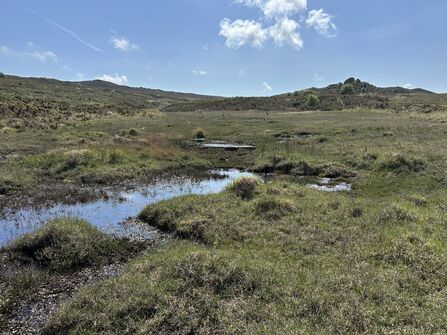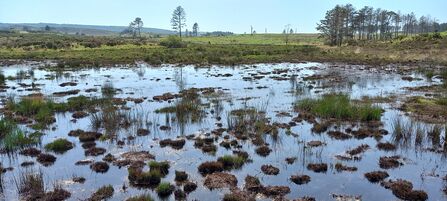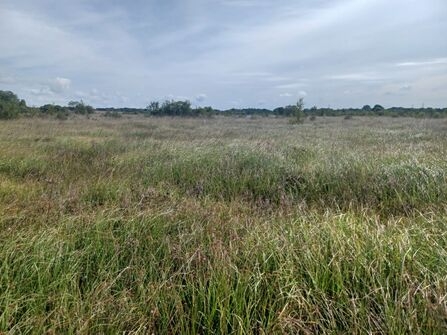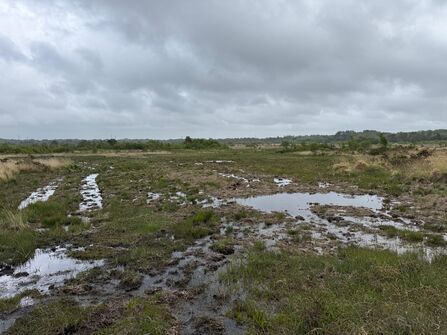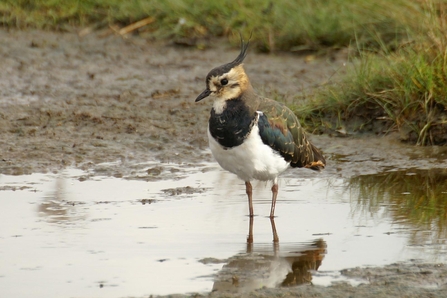

Peatlands are incredible wild places, home to a whole host of rare and unusual plants, birds and insects. These wetland landscapes are characterised by waterlogged soils made of dead and decaying plants, called peat. Peat forms at an incredibly slow rate, accumulating on average only 1mm a year - that means it takes 1,000 years for one metre of peat to form! The key component of peat is a moss called sphagnum, which forms multi-coloured carpets across the landscape and breaks down very slowly under the waterlogged conditions.
But peatlands aren't just an important habitat for wildlife, they are also among the most carbon-rich ecosystems on Earth. Occupying 3% of the global land surface and 12% of UK land area, healthy peatlands capture CO2 from the atmosphere through photosynthesis. Because the plants that grow on peatlands do not fully decompose under wet conditions, they do not release carbon which would otherwise be returned to the atmosphere as CO2. As well as this, peatlands can reduce flood risk by slowing the flow of water from the uplands, and by providing floodplain storage in the lowlands.