
Anita Goodwin / Devil's fingers
Day Seven: Strange and Unique Fungi
Welcome to day seven
Today is the last day of your course, and we are going to finish our course by learning about three unique and strange fungi - keep your eyes peeled for these on your next walk.
Stinkhorn fungus
Phallus impudicus
Statistics
When to see: June to October
Cap width: 3-6cm
How to identify
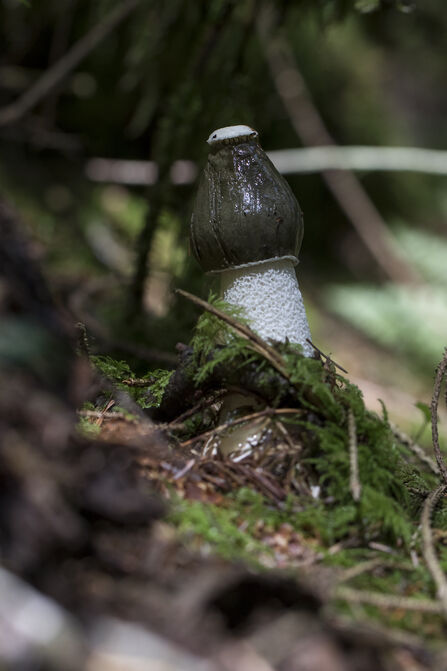
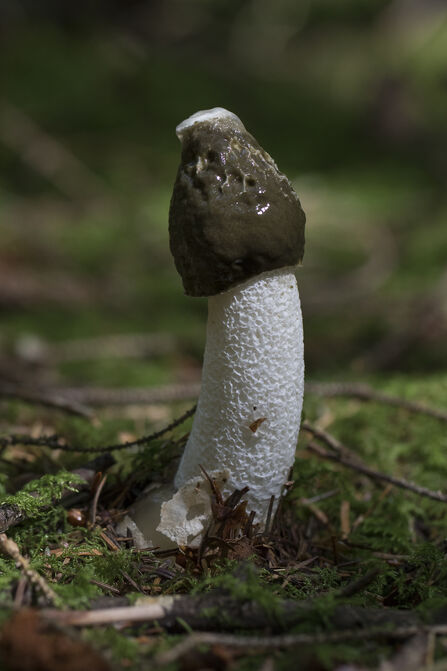
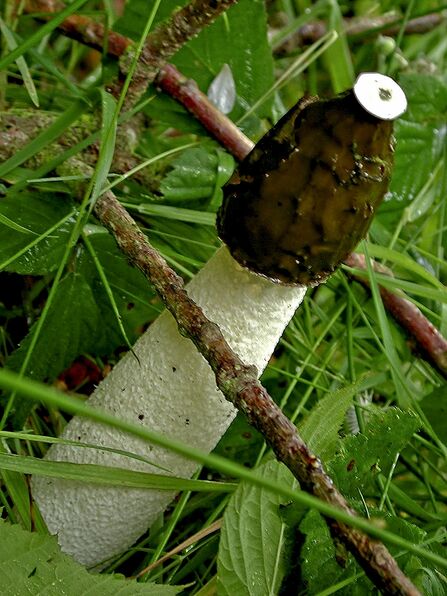
This unmistakeable fungus is predominantly found in woods and gardens - particularly around rotting wood.
When identifying - you may know you have stumbled across this fungus first by the smell! The pitted, bell shaped cap is covered with an olive-brown slime which has an offensive smell that has been likened to rotting meat. It has a white stem-like structure which emerges from an egg-shaped base with a large cap.
Did you know?
The spores of the stinkhorn are contained within the slime that covers its cap. Flies are attracted to the offensive-smelling slime, in turn, scattering the spores.
Stinkhorn ©Chris Lawrence
Stinkhorn ©Chris Lawrence
Devil's fingers fungus
Clathrus archeri
Statistics
When to see: All year round
Size: Is around 5cm high although tentacles can be up to 7cm before arching downards
How to identify
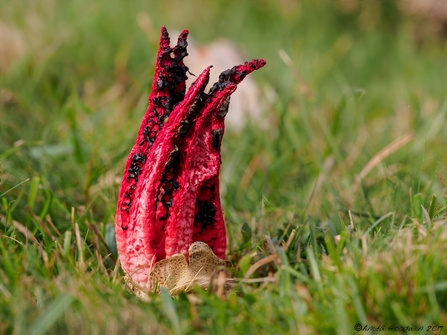
This fungus originated in the southern hemisphere, before being found in the UK in 1914 - though it is still fairly rare here. It can usually be found amongst leaf litter or in parks and gardens.
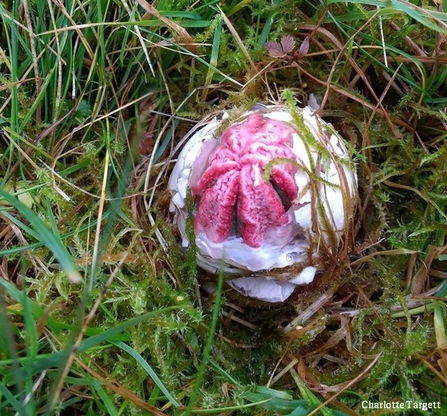
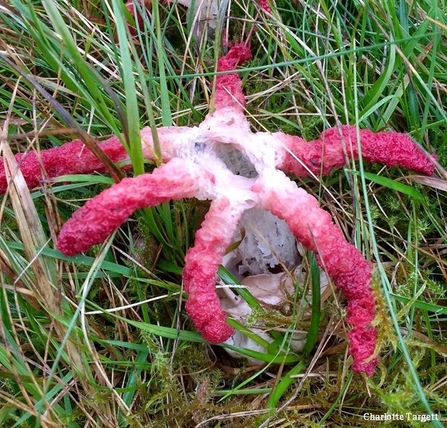
A distincive bright red colour, the fungus hatches from a slimy, gelatinous ‘egg’, before tentacle-like arms protrude and grow. It is related to the stinkhorns, meaning it has a strong and unpleasant smell.
Did you know?
This fungus smells like rotting flesh which attract insects to arms where the spores are found. The spores are then spread by the visiting insects.
Anita Goodwin / Devil's fingers
Charlotte Targett
Charlotte Targett
Candlesnuff fungus
Xylaria hypoxylon
Statistics
When to see: January to December
Size: Height is 1-6cm
How to identify
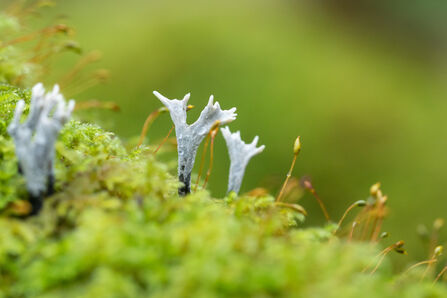
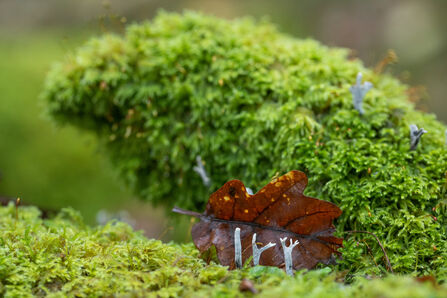
This fungus is also known as ‘stag’s horn’ and is usually found in groups on dead and rotting wood of all types of trees.
The fruiting body of the candlesnuff fungus is simple and stick-like. At the base of the stem it is black and hairy, whilst being powdery white at the top. Sometimes the stem can become flattened and branched in a fork - like an antler, hence its other common name.
Did you know?
The powdery tops of the branches in spring is made up of spores - they produce more later in the season, giving it two chances to reproduce. The candlesnuff fungus relies on dead wood, so it can be important to leave dead wood in your garden over this time of year to encourage a biodiverse habitat!
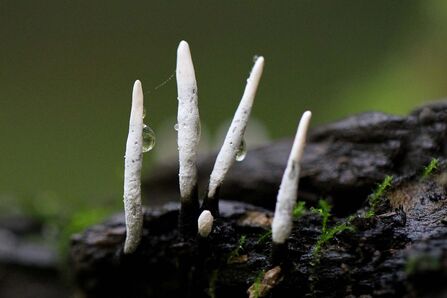
Candlesnuff Fungus ©Margaret Holland