Lyscombe Becomes a National Nature Reserve

Lyscombe Becomes a National Nature Reserve

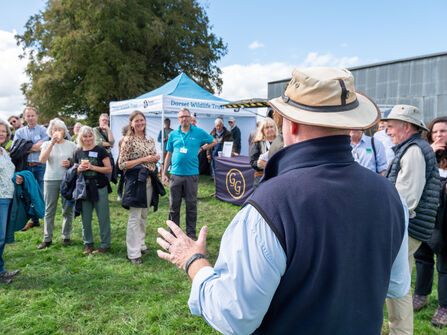
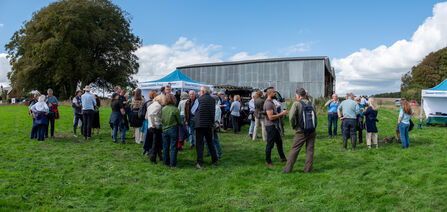
James Burland / Lyscombe King's Series National Nature Reserve celebration event

Lyscombe nature reserve has officially been designated as a National Nature Reserve, recognising its national importance and marking a significant milestone for Dorset Wildlife Trust. But this is just the beginning: discover how we’re working with nature to restore this remarkable landscape and create a brighter future for wildlife.

Last week marked a very special moment for Dorset Wildlife Trust as our Lyscombe nature reserve was officially designated as a National Nature Reserve, becoming the 16th site in The King’s Series of National Nature Reserves.

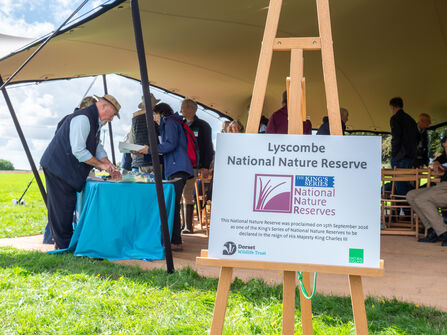
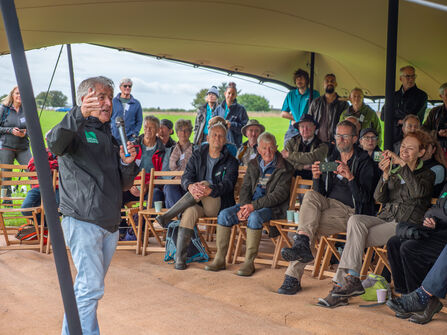
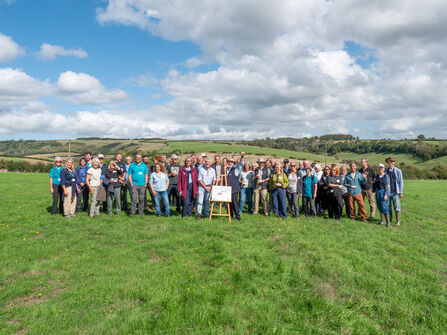
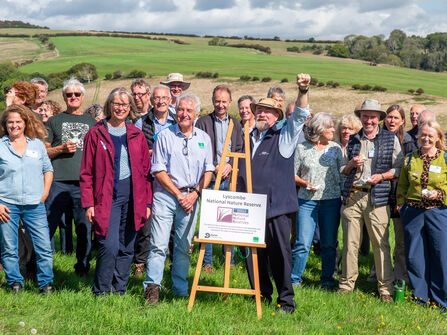
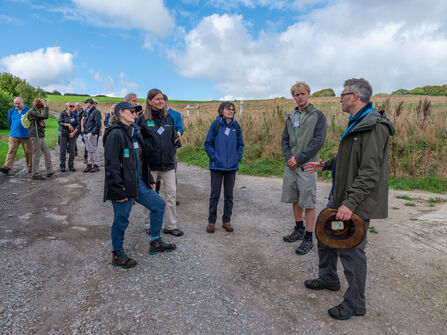
The designation was celebrated at Lyscombe on Tuesday 15 September, when we were joined by Jaqueline Swift, Deputy Lord-Lieutenant of Dorset, representing His Majesty The King; Tony Juniper CBE, Chair of Natural England; Lisbet Sherlock, Chair of Dorset Wildlife Trust; and a wonderful gathering of our members, supporters, volunteers, partners and friends.

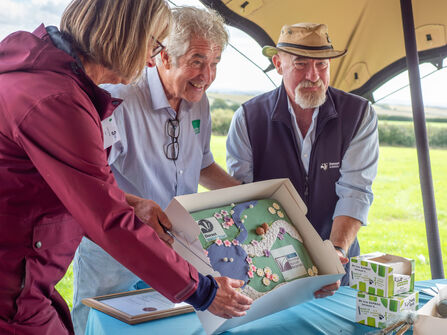
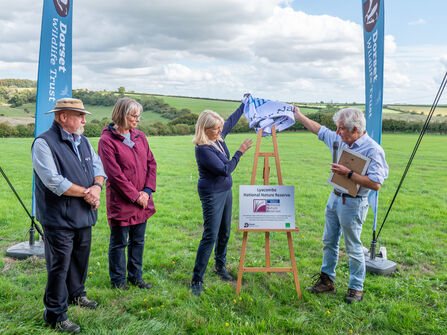
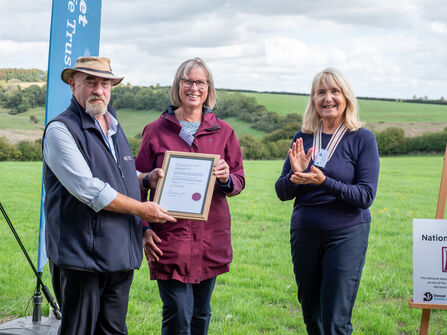
Jaqueline Swift and Tony Juniper jointly unveiled the official National Nature Reserve plaque, before Tony presented Lisbet and me with the certificate formally recognising Lyscombe’s new status. It was a proud moment and an important recognition of both the national significance of this extraordinary landscape and our ambitions for its future.
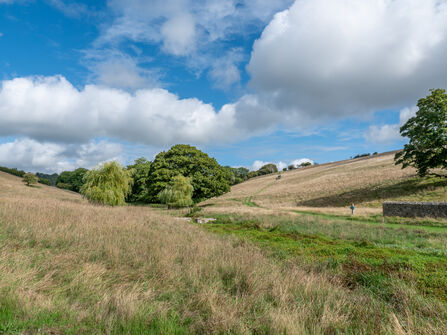
When Dorset Wildlife Trust acquired Lyscombe in 2024, in partnership with Natural England, we knew we had secured something very special. At 334 hectares (833 acres) it includes nationally important SSSI chalk downland, woodland, the source of the Little Piddle River and a rich archaeological and cultural heritage. It is already home to at least six species of orchid, chalkhill blue butterflies and a wealth of other wildlife.

But what is most exciting is its potential. Lyscombe gives us the opportunity to make space for nature at a genuinely landscape scale. Through rewilding and natural regeneration, extensive grazing and the restoration of rivers and wetlands, we can allow natural processes to shape an increasingly rich mosaic of habitats.

That is particularly important as we face the twin crises of climate change and nature loss. Making more space for nature creates larger, healthier and better-connected habitats, giving wildlife greater opportunity to move and adapt as temperatures and rainfall patterns change. Restoring the Little Piddle and surrounding wetlands will also help us hold more water in the landscape, benefiting wildlife and water quality while increasing resilience to drought and reducing the impacts of heavy rainfall.

Lyscombe is also much more than an isolated nature reserve. Sitting within the Dorset Downs landscape, it can become a hub from which nature recovery spreads across the surrounding countryside. We are working with neighbouring farmers and landowners, sharing what we learn here and at Wild Woodbury to help create bigger, better and more connected spaces for wildlife across Dorset.

National Nature Reserve status is therefore hugely significant, but designation alone does not restore nature. What matters is what happens next: improving the ecological condition of the land, allowing nature to recover and ensuring that recovery is sustained for generations to come.

None of this would have been possible without partnership. I am enormously grateful to Natural England for its vision and support; to our staff and volunteers for their expertise and commitment; to our members, donors and supporters; and to the many neighbours, organisations and communities who share our ambition for this remarkable landscape.

The King’s Series designation is wonderful recognition of how far Lyscombe has already come. But in many ways, this is just the beginning.

Lyscombe gives us something we urgently need – optimism, and tangible evidence that when we give nature space, time and care, recovery is possible.