
Over the past few months, there have been some significant changes happening at Lyscombe National Nature Reserve.
Not least in the weather. The summer heat and drought conditions are almost a distant memory now. It has been amazing to see how quickly the parched, brown fields returned to their luscious green once we had some rain. Interestingly, it was noticeable during the heatwaves that the SSSI downland, which is by far the most species-rich grassland on the nature reserve, maintained a slight green hue throughout, especially when compared to the improved pasture fields, which were starting to resemble a desert.
The change in seasons brings with it an end to many of the surveys we do at Lyscombe and across our other nature reserves. This year, the butterfly surveys have been memorable, has there ever been so many clouded yellows in Dorset?! At Lyscombe, clouded yellows were not the only highlight. For the first time since Dorset Wildlife Trust acquired Lyscombe, we had sightings of Adonis blues. This chalk grassland specialist butterfly needs areas of very short grassland with an abundance of the caterpillars’ food plant, horseshoe vetch. After just over a year of grazing, the downland slopes at Lyscombe were back in the right condition for this charismatic pollinator, which is on the GB red list of butterflies, and is considered vulnerable to extinction in Great Britain. A late summer sighting of a dark green fritillary, nectaring on some thistles, brought the total number of butterfly species I have seen at Lyscombe up to 32. A very respectable total.
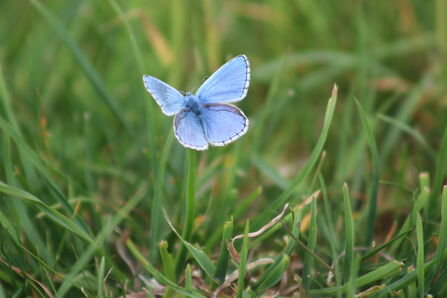
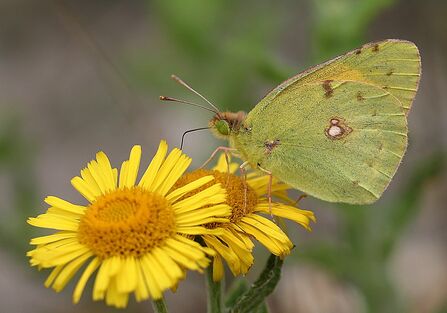
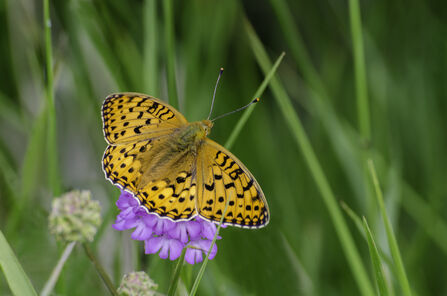
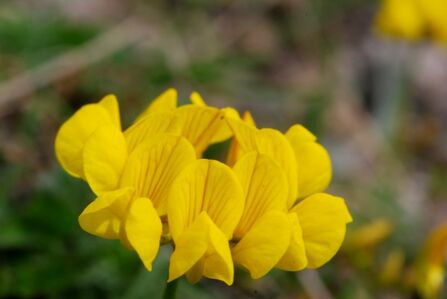
The change in seasons brings with it an end to many of the surveys we do at Lyscombe and across our other nature reserves. This year, the butterfly surveys have been memorable. Has there ever been so many clouded yellows in Dorset?! At Lyscombe, clouded yellows were not the only highlight. For the first time since Dorset Wildlife Trust acquired Lyscombe, we had sightings of Adonis blues. This chalk grassland specialist butterfly needs areas of very short grassland with an abundance of the caterpillars’ food plant, horseshoe vetch. After just over a year of grazing, the downland slopes at Lyscombe were back in the right condition for this charismatic pollinator, which is on the GB Red List of butterflies and is considered vulnerable to extinction in Great Britain. A late summer sighting of a dark green fritillary, nectaring on some thistles, brought the total number of butterfly species I have seen at Lyscombe up to 32. A very respectable total.