
Sarah Hodgson / Seaweed at Kimmeridge
Day Three: Seaweed
Welcome to day three
Today, we are encouraging you to keep an eye out for seaweed, and try to identify any of the species below!
Seaweed is a familiar sight for most, often seen washed up on the shore on a coastal walk. Dorset is home to a spectacular coastline, from Kimmeridge Bay to Chesil. Why not stop for a coffee at our Wild Chesil Centre, followed by a stroll along the beach?
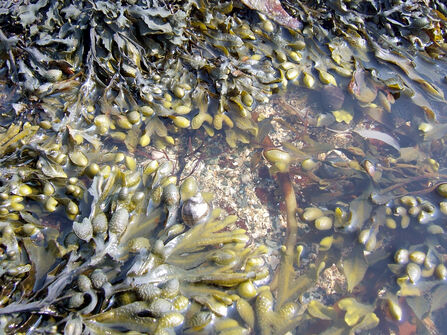
Bladder wrack
Fucus vesiculosus
Statistics
When to see: All year round
Size: Can be 15-100cm in length
How to identify
The most common type of seaweed that you’ll find on the UK’s shorelines, bladder wrack grows between the high and low water marks on rocky shores. Bladder wrack is an olive-brown colour and can be recognised by its strap-like, branching fronds that have air-filled 'bladders' along their length (often appearing in pairs either side of the pronounced mid-rib). The edges are not serrated.
Did you know?
Bladder wrack was once used as a source of iodine to treat goitres. Nowadays, you're more likely to find it in your anti-ageing cream as research has found that it has anti-ageing properties!
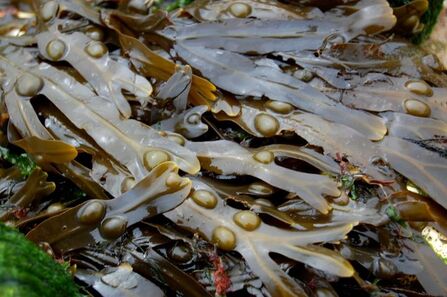
Bladder wrack ©Kirsten Smith

Peacock's tail
Padina pavonica
Statistics
When to see: April to September
Size: Can be up to 10cm in height
How to identify
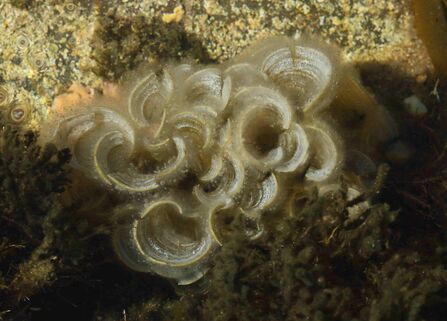
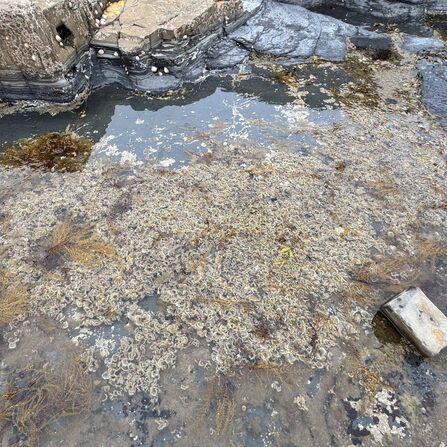
Peacock’s tail is a distinctive and nationally scarce type of seaweed found growing in rockpools in scattered locations along the south coasts of England and Wales. You can identify them by clusters of curved, funnel-shaped fronds which are cream to pale brown in colour, with concentric, chalky bands.
Did you know?
This seaweed likes warmer water and is more common further south, for example in the Mediterranean. In the UK it is limited to the south coasts of England and Wales.
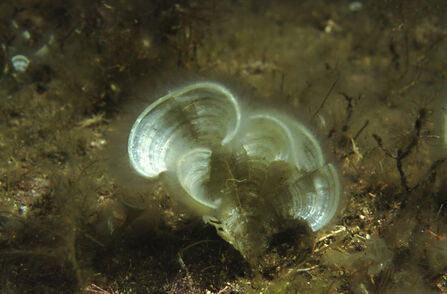
Peacocks tail Padina Pavonina © Peter Tinsley
Carrageen
Chondrus crispus
Statistics
When to see: All year round
Size: Can be up to 20cm in length
How to identify
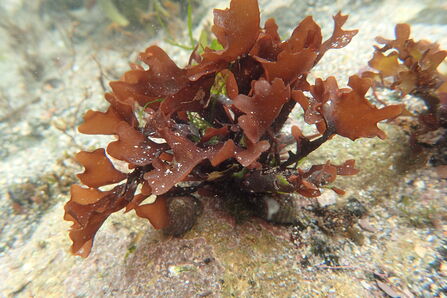
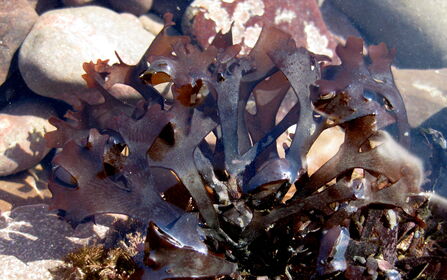
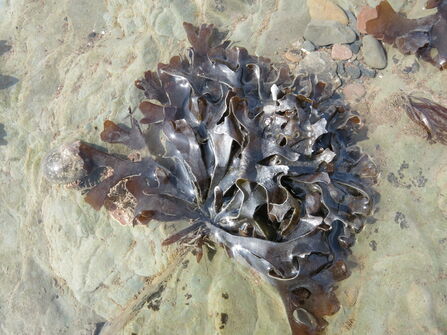
Carrageen (also known as Irish moss) is a common seaweed found on rocky shores and in estuaries. It’s a thin, reddish-purple seaweed, with branching fronds and no air bladders. The fronds may appear iridescent when submerged and can turn green if exposed to bright sunlight for prolonged periods.
Did you know?
Carrageen is harvested commercially for its carrageenan - a polysaccharide molecule that is used in the food industry for gelling and thickening. So, it might be in your ice cream or have been used for fining your beer or wine! It has been used since the 15th Century and is a vegan alternative to gelatin.