A Wild Year at Dorset Wildlife Trust

A Wild Year at Dorset Wildlife Trust

It's been a wild year for Dorset Wildlife Trust! As we approach 2026, we look back at some of our highlights from 2025. From the opening of our state-of-the-art wildlife observatory on Brownsea Island to a boom in dormouse survey numbers, Jack Clarke, Dorset Wildlife Trust's Marketing and Communications Officer takes a look back on a really wild year in Dorset.

The opening of The Lookout

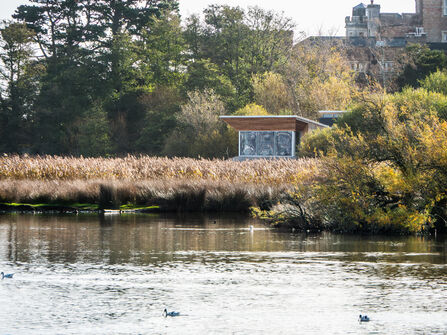
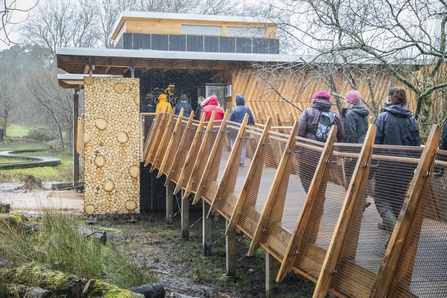
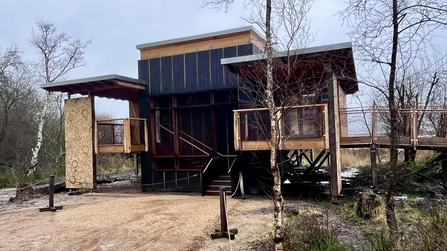
In March 2025 we unveiled The Fine Foundation Lookout on Brownsea Island, a brand-new, state-of-the-art wildlife observatory boasting panoramic views across the Lagoon. Nestled among the trees and reached by new boardwalks to avoid disturbance to wildlife, The Lookout is part of our Wild Brownsea project (delivered together with the National Trust and supported by the National Lottery Heritage Fund and our generous members). To celebrate, we invited over 90 community members to our launch event to enjoy the stunning views of the Lagoon and diverse birdlife and explore the island’s rich habitats on guided walks. Since its opening, The Lookout has helped people to connect with nature in new ways, boosted awareness of the vital haven the Lagoon provides to wetland birds, and educated members of the public on the importance of wildlife conservation in Dorset.  

Brownsea Island is closed to visitors over the winter whilst conservation work takes place to maintain the habitats that support the island’s iconic species such as red squirrels, Sandwich terns and avocets. But be sure to plan your trip to The Lookout when the island re-opens in spring 2026. 
Dormice thriving at Powerstock Common

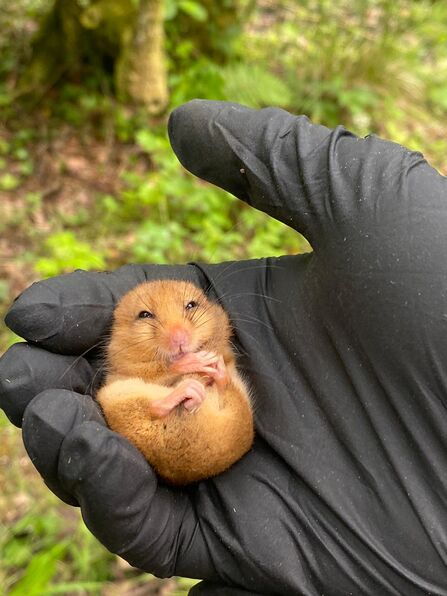
One of the most uplifting moments this year came from Powerstock Common nature reserve, where our ecology team recorded an unexpected late-season surge in breeding dormice. Over the two-month period, almost 50 dormice were found in monitoring boxes across the site, including a few late-season breeding females. This indicates that 2025 has been a particularly successful breeding year for dormice in Dorset. The warm summer likely encouraged second broods or even early breeding among this year’s young. 

But while these local findings are encouraging, the wider national picture remains concerning. According to data from the National Dormouse Monitoring Programme, overseen by PTES, dormice have suffered a 70% decline between 2000 and 2022. Our results at Powerstock Common highlight just how important habitat management and long-term monitoring are in helping this vulnerable species recover. 

Providing a voice for young people

In 2025 we launched our Young Voices Workshops, a programme of events aiming to empower local people aged 14-18 with the skills, knowledge and opportunity to stand up for nature and make a real difference in Dorset. These free, monthly sessions gave young people the chance to learn new conservation skills and experience nature through various activities including bird song identification, nature journalling, seashore citizen science, and so much more. It was truly inspiring to see young people passionate about the wildlife and wild spaces on their doorstep, and to watch them gain confidence in taking action to protect it.

The next Young Voices Workshop will be on Sunday 11 January 2026 and will focus on the wonders of migration. Find out more and book your place here.

Young Voices Workshop

Fay Rickeard / Young Voices Workshop

2025 photography competition

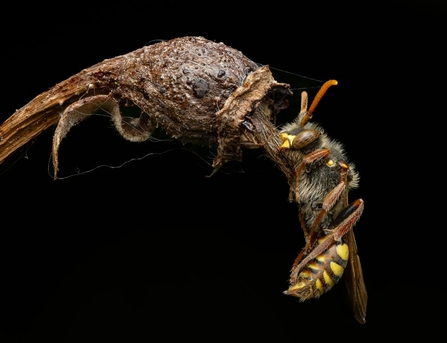
May 2025 saw the launch of our third annual photography competition, and once again, the response was incredible. Hundreds of stunning images were submitted across seven categories, including our new ‘Taken on your Mobile’ category, proving that you don’t need specialist equipment to capture the beauty of Dorset’s wildlife.  

Our judging panel, including professional landscape and nature photographer, Jack Lodge, had the pleasure of carefully sifting through the spectacular images. From battling birds of prey to marvellous marine creatures, it was truly a joy to see so many spectacular photos taken in our beautiful county, and even more impressive to see so many people take on the challenge of exploring our nature reserves and connecting with nature.  

We then had the pleasure of displaying a selection of photos at The Fine Foundation Wild Chesil Centre for the 2025 Wildlife Photography Exhibition. Visitors enjoyed viewing the diverse range of wild shots, chat with like-minded wildlife photographers, and even purchase their favourite prints to help fund Dorset Wildlife Trust’s work. 

We would like to take this opportunity to say a special thank you to our incredible members and supporters who took part in the 2025 photography competition. The showstopping photos of Dorset’s precious wildlife and wild places that you shared with us will be used to encourage and inspire people to act for nature and create a wilder Dorset. And of course, thank you to Jack Lodge Photography, The Dorset Golf & Country Club, Cardoba Rewards and The Gardens Group for generously providing prizes for the competition. 

Dorset Seasearch highlights

Dorset Seasearch is a group of volunteer divers who have been providing data and records to contribute towards our knowledge of Dorset’s seabed habitats and species for 30 years, and 2025 was no exception. 

30 volunteers contributed to Seasearch in Dorset in 2025, collecting imagery for 3D models to detect change, recording the spread of an unidentified colonial seasquirt first noticed in Weymouth Bay, and discovering the snapping shrimp under boulders in Dorset reefs. Hydrophones (underwater microphones) deployed over local reefs have recorded a ceaseless background cacophony of click sounds – at least some of these sounds can be attributed to the snapping shrimp. 

During the organised dives, some of which were supported by Dorset Wildlife Trust, divers spotted the first comber (Serranus cabrilla) to be seen in Dorset waters (Lyme Bay), a fish which is generally found in warmer waters from southern Africa to Portugal and the Mediterranean but has become increasingly common in waters off south Devon and Cornwall. 

Comber fish

James Gill / Comber fish in Lyme Bay

Species Survival Fund

2025 signalled the last full calendar year of the Species Survival Fund which comes to an end in February 2026. Launched in March 2024, Dorset Wildlife Trust was awarded the funding by the Government’s Species Survival Fund (developed by Defra and delivered by The National Lottery Heritage Fund in partnership with Natural England and the Environment Agency) for a project to create and revitalise over 500 hectares of habitats across 18 sites in Dorset. 

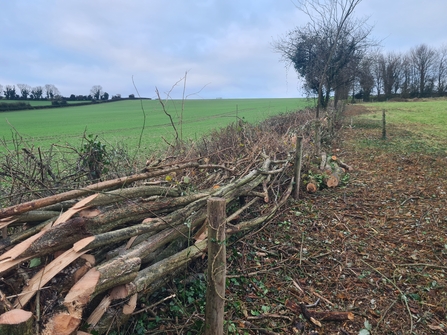
Thanks to our hardworking, dedicated staff, we have rewilded 356ha of degraded grassland and arable land, restored and enhanced 96ha of meadows, downland and heathland, 37ha of wetland habitats, 1.6km of river, and 12 ponds, 11ha of native broadleaved woodland and orchards, and the creation and maintenance of 2100m of hedgerows. And of course, this would not have been possible without over 100 volunteers contributing 3600 volunteer hours, and the support of several farmers and landowners.  

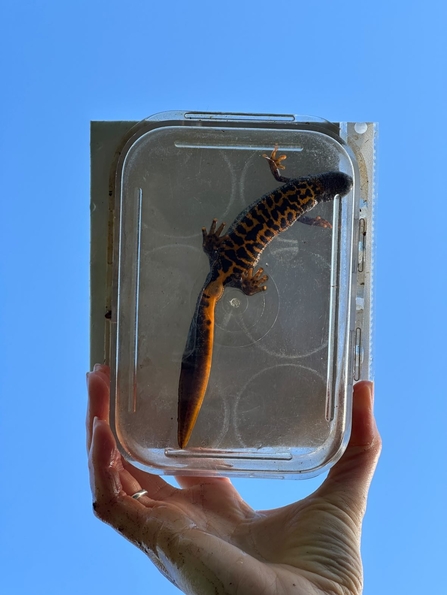
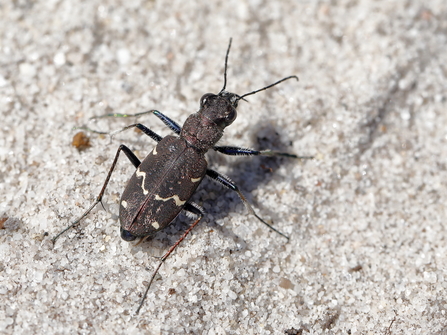
A lot of this groundbreaking work took place throughout 2025, benefitting countless species such as hazel dormice, dingy mocha, great crested newts, Sandwich terns and heath tiger beetles.  

Cetaceans surveying along the south coast

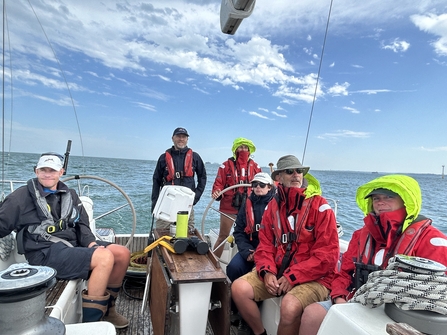
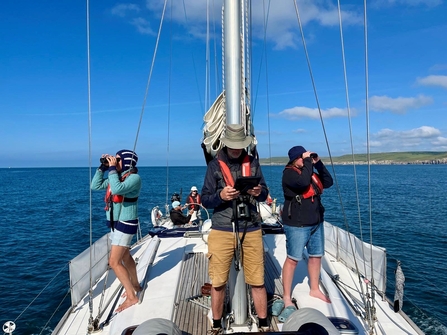
In June 2025, a team from Dorset Wildlife Trust staff joined forces with the University of Plymouth to carry out a five-day visual and acoustic survey for cetaceans along the south coast of England. Using both visual observations and an underwater hydrophone, the team gathered valuable data on species presence and behaviour. 

The trip delivered some unforgettable wildlife moments: pods of common dolphins riding the bow, calves swimming alongside their mothers, grey seals popping up between waves, Manx shearwaters skimming the surface, and a feeding frenzy of hundreds of gulls and gannets. One of the most surprising sightings was a sunfish drifting just beneath the waterline. 

Beyond the excitement, the survey plays an important role in monitoring the health of our seas. The continuous lookout from the deck was complemented by a towed hydrophone capable of detecting the ultrasound clicks from dolphins and porpoises - even the most experienced observers will miss some encounters.  The many hours of hydrophone data will be analysed along with recordings from subsequent voyages throughout the summer. 

The information collected helps build a clearer picture of how cetaceans use the south-coast waters, particularly a group of resident bottlenose dolphins known to range between Sussex and Cornwall — and supports conservation efforts to protect these remarkable animals. 

Record spoonbill numbers

Brownsea Lagoon is an important habitat for many feeding, roosting and migrating birds throughout the year. But this autumn was particularly special, with the lagoon hosting a record-breaking number of spoonbills 

These large white birds, with their distinctive flattened spoon-shaped bills, breed in mainland Europe, but are now experiencing breeding success in parts of the UK. 

Numbers on the lagoon usually grow in the autumn, peaking mid-October before they begin to disperse in late winter and early spring. But this year has been exceptional. A few years ago, it was exciting to spot 10-20 spoonbills on the lagoon. But on 30 September 2025, we counted a grand total of 115 birds – a record not only for Brownsea and Poole Harbour, but for the whole of Dorset! 

We can’t wait to see if 2026 sees another record-breaking year for spoonbills. 

Spoonbills on Brownsea lagoon

Daphne Wuenn, Dorset Wildlife Trust 2023 photography competition / Spoonbills on Brownsea lagoon

Water for Wildlife target reached

In September we launched our urgent Water for Wildlife appeal, and we are delighted to share that we have now smashed our £30,000 target! 

Thanks to the generous donations of our members and supporters, we will be able to restore and create more wetland habitats, strengthen ecosystems, boost biodiversity and ensure Dorset’s rivers and wetlands thrive for future generations to come. Not only has this appeal helped secure the future of countless species such as lapwing, water voles and great crested newts, but it also serves as a powerful reminder of what’s possible when our members and supporters act together for nature. 

Lapwing

David Longshaw