Dormouse success in Dorset

Dormouse success in Dorset

Amy Lewis

Reserves Ecology Manager Steve Masters shares a behind-the-scenes look at an extraordinary year for dormice across our nature reserves. From record-breaking late-season numbers to bustling autumn activity on Powerstock Common, discover why 2025 became the year of the late dormouse, and what it tells us about these elusive mammals.
Hazel dormouse in hand as part of a dormouse survey

Steve Masters / Hazel dormouse in the hand as part of a dormouse survey at Powerstock Common

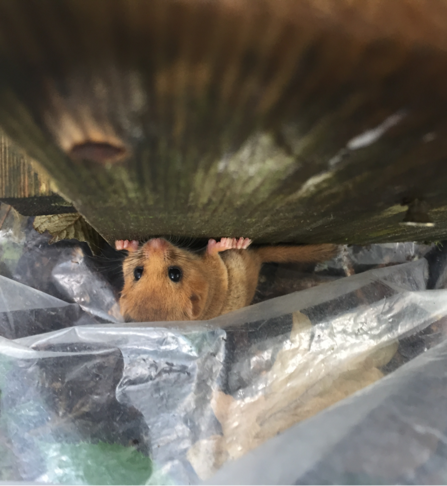
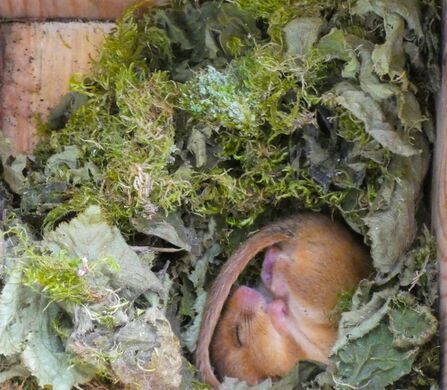
The bedtime story goes, in our house, that dormice duo Murray and Linda lived at number 24 dormouse box on Powerstock Common. They often have encounters with other animals, including Boris the Bechstein’s bat, and fellow dormice getting into to all sorts of escapades. Well, 2025 saw them inundated with a huge number of new members very late in the season, more than ever previously recorded, the late summer dormouse parties abounded!

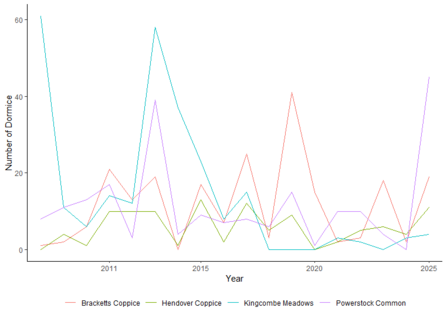
So, 2025 was the year of the late dormouse for many of our nature reserves. Where we have consistently been monitoring them, through the National Dormouse Monitoring Programme (NDMP), last year delivered some of the highest numbers of nests and dormice for a number of years, shown in the graphs below. This was especially concentrated toward the end of the season, with highest numbers recorded in October and November, including a large number of young dormice.
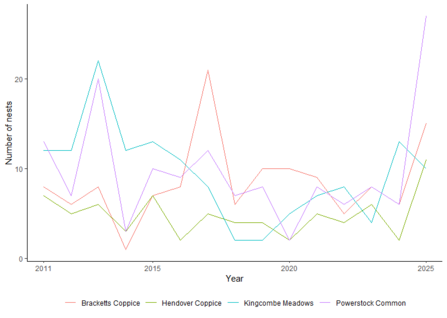
Each of our four NDMP nature reserves showed an increase on the average number of nests (2011-2024), which was great news. However, Powerstock Common smashed the ceiling with a 217% increase in 2025 for the average number of nests per year (2011-2024). 

The actual number of dormice recorded through the surveys increased across three of the four nature reserves against the average per year between 2008-2024. Again, Powerstock Common seemed to have a particular explosion, with a 363% increase on average!

Great news for dormice, and probably indicative of the wider landscape where suitable habitat was available. But why such a boom and for the most sites, so late in the season?

Our weather last season likely played a large role in this. You all remember that dry period which we endured throughout the summer, when you spent hours watering your allotment or veggie plots! Well, the sunniest spring on record followed by the warmest summer on record helped to increase the opportunities for dormice to feed, mate and raise young early in the season. What we may have seen is that those young born early in the year were able to breed in their first year. Along with some females being able to raise a second litter.

So, what does it mean for those little ones born late in the season? Well, they better have got chomping their way through some tasty, fruity and nutty morsels to fatten themselves up for winter, as they can lose up to 30% of their body mass in hibernation. Although this winter is currently quite mild, it’s pretty wet out there.

The overall picture though for dormice across our countryside is still dismal, with The State of Britains Dormice 2023 report (produced by the people’s trust for endangered species) suggesting an over reduction in population of 70% between 2000-2022.

So, years like 2025 are a great boost to the population, but without continuing to increase the habitat availability and connectivity in our landscape they still face an uncertain future. Working to restore land across landscapes is best way secure a future, as our precious pockets of nature reserves can only sustain them for so long. 

Let’s hope Murray, Linda and friends are tucked up in a cosy winter nest, and snoozing deeply, preparing for the challenges of the new season.